

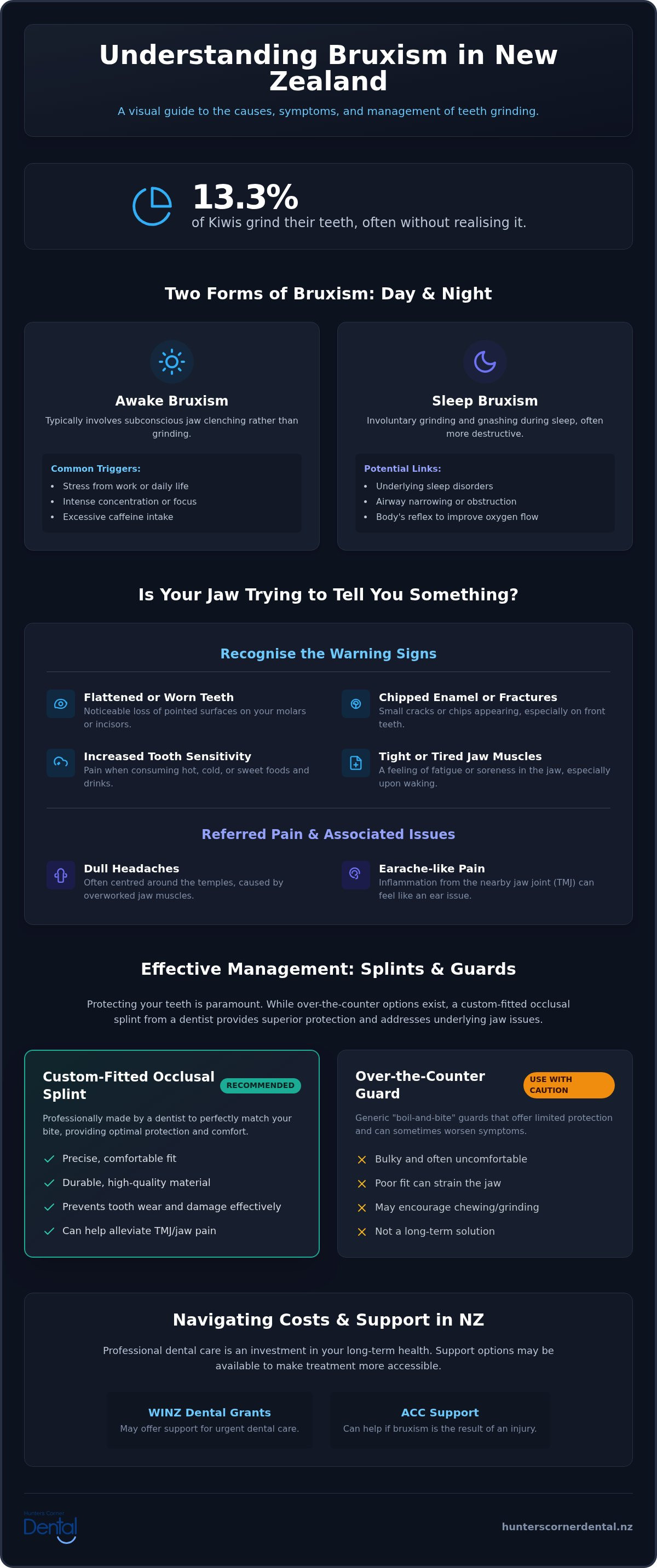
Did you know that roughly 13.3% of Kiwis spend their nights grinding their teeth without even realising it? If you often wake up with a dull headache, sensitive teeth, or a clicking jaw, you are likely searching for reliable bruxism treatment nz to stop the damage before it starts. It is a common struggle, and the anxiety of chipped teeth or potential dental costs only adds to the stress that often triggers the grinding in the first place.
We understand how much this affects your sleep and your peace of mind. You deserve to wake up feeling rested and pain-free. This guide helps you identify the subtle signs of teeth grinding and explores the most effective professional and home-based treatments available across New Zealand. We will also look at how ACC and WINZ options can help make your care more accessible, ensuring you can focus on protecting your smile and finding lasting relief.
Key Takeaways
- Learn to distinguish between awake and sleep bruxism to better understand your body’s unique triggers and stressors.
- Discover why custom-fitted occlusal splints provide superior protection and comfort compared to generic over-the-counter options for bruxism treatment nz.
- Understand the vital connection between chronic teeth grinding and TMJ health to prevent long-term jaw dysfunction.
- Identify the physical warning signs, from worn enamel to facial fatigue, so you can take proactive steps to protect your natural teeth.
- Gain a clear overview of dental care costs in New Zealand and learn how to access support through WINZ dental grants and ACC.
Understanding Bruxism: Why Do Kiwis Grind Their Teeth?
Bruxism is the clinical term for the involuntary clenching, gnashing, or grinding of your teeth. It is a common condition that often happens without you even realising it. For many, it is a subconscious response to internal or external pressures. Understanding why it happens is the first step toward finding effective bruxism treatment nz. For a comprehensive overview of bruxism, it is helpful to look at how it manifests in two distinct ways: while you are awake and while you are asleep.
The biological "why" behind this habit is often multi-faceted. It isn't just a dental problem; it is frequently a physical manifestation of your body's stress response. In other cases, the trigger is mechanical. When you have a misaligned bite, also known as malocclusion, your jaw muscles may struggle to find a comfortable resting position. This constant searching can trigger a grinding reflex as your body tries to "file down" the teeth that feel in the way.
The Link Between Stress and Awake Bruxism
Awake bruxism usually involves clenching the jaw rather than grinding the teeth back and forth. Think about the last time you were stuck in heavy traffic or focused intensely on a difficult task at work. You might have noticed your teeth were tightly pressed together. This "micro-clenching" is a common reaction to modern lifestyle pressures. In New Zealand, our high-paced work environments and even our beloved coffee culture can play a role. Excessive caffeine intake keeps your nervous system on high alert. This makes it much harder for your facial muscles to remain relaxed during the day.
Sleep Bruxism and Airway Health
Sleep bruxism is often more destructive because you aren't awake to stop it. Research suggests a significant link between teeth grinding and how we breathe at night. When the airway narrows or becomes partially blocked, the brain may signal the jaw to grind. This movement helps to pull the tongue and jaw forward, reopening the airway to allow for better oxygen flow. This is why many people who snore also struggle with significant tooth wear. Sleep bruxism is a potential indicator of underlying sleep disorders. If your partner mentions you make grinding noises at night, or if you feel exhausted despite a full night's sleep, your bruxism treatment nz journey should involve looking at your overall airway health. Protecting your smile often goes hand in hand with improving your sleep quality.
Recognising the Symptoms: Is Your Jaw Trying to Tell You Something?
Your body often sends quiet signals before significant damage occurs. If you wake up with a tight jaw or teeth that feel "off", it's time to listen. One of the most obvious signs is finding flattened or blunt surfaces on your teeth where they used to be pointed. Sometimes, a partner might even hear the audible sound of grinding during the night. This noise can be quite alarming, often described as a sandpaper-like scraping. Recognising these signs early is crucial for seeking effective bruxism treatment nz before the enamel wears down completely.
Common physical signs include:
- Flattened or worn-down tooth surfaces.
- Chipped enamel or small fractures.
- Increased tooth sensitivity to temperature.
- Tight or tired jaw muscles, especially in the morning.
Dental Warning Signs Your Dentist Looks For
During a routine visit, your dentist looks for specific markers that you might miss. Enamel erosion is a major red flag. As the protective outer layer thins, your teeth become increasingly sensitive to cold drinks or ice cream. You might also notice fractured fillings or dental work that keeps failing for no apparent reason. These aren't just coincidences; they are often the result of the immense pressure exerted during a clenching episode. Regular professional dental check-ups are the best way to catch these issues before they lead to tooth loss or the need for expensive restorative work like crowns.
Referred Pain: When a Headache is Actually a Jaw Issue
Pain doesn't always stay in the mouth. Many people suffer from "temple" headaches that are actually caused by the masseter muscle being overworked. This muscle is incredibly strong, and when it clenches all night, it creates tension that radiates upward. It is also common for bruxism to feel like a chronic earache. Because the jaw joint is so close to the ear canal, the inflammation can be confusing. This is closely tied to the TMJ connection, where the joint itself becomes strained and tender. The emotional toll of this chronic pain and the resulting sleep disruption can leave you feeling drained and irritable throughout your day.
Ignoring these symptoms can lead to permanent changes in your facial structure and your smile. Over time, constant grinding can shorten the height of your teeth, affecting how your face looks and functions. Taking action now protects your natural teeth and saves you from complex surgeries later. If you've noticed any of these signs, it's worth chatting with a professional. You can book a consultation to discuss your symptoms and explore personalised options for bruxism treatment nz.
How to Manage Bruxism: A Step-by-Step Treatment Guide
Managing bruxism requires a dual approach. You need to protect your teeth from immediate physical wear while addressing the underlying muscle tension. While generic "boil-and-bite" kits from the local chemist might seem like an easy fix, they often lack the precision needed for true relief. These bulky guards can sometimes even worsen jaw pain by shifting your bite alignment. For effective bruxism treatment nz, a custom-fitted approach is the gold standard. You can find detailed information on bruxism treatment and management to see why professional intervention is so highly recommended by dental researchers.
Step 1: The Professional Consultation and Splint Fitting
Your journey starts with a thorough assessment. Your dentist will check for muscle tenderness, joint clicking, and specific wear patterns on your teeth. If a splint is recommended, we take digital impressions or moulds of your teeth. This ensures a perfect fit that feels comfortable throughout the night. A custom-fitted occlusal splint works by creating a protective barrier between your upper and lower teeth. More importantly, it is designed to guide your jaw into a neutral, relaxed position. This redistributes the intense force of clenching. It gives your overworked muscles a chance to rest and heal while you sleep.
Step 2: Lifestyle and Home Habit Training
Protection is vital, but habit training helps address the root cause. You can actually "unlearn" daytime clenching by practising mindfulness. Try setting a "teeth apart, tongue up" reminder on your phone. If you catch yourself clenching while driving or working, take a deep breath and consciously drop your shoulders. Reducing stimulants like caffeine and alcohol, especially in the evening, can also significantly lower the intensity of night-time grinding. Establishing a consistent sleep routine is a simple but powerful tool for Kiwis looking to lower their overall stress levels. Since chronic stress is a major contributor, you may also find it helpful to visit Norton Wellness to explore professional mental health support. A calm mind often leads to a calmer jaw.
If your grinding has already caused significant wear, you don't have to live with a compromised smile. Restorative options like porcelain veneers or crowns can rebuild the height of your teeth and restore their natural appearance. These treatments not only improve your confidence but also help realign your bite. This makes it easier to maintain your results long-term. Combining professional bruxism treatment nz with these lifestyle changes offers the best path toward a pain-free future and a smile you feel proud to show off.
Addressing the TMJ Connection and Jaw Dysfunction
Your jaw is a complex piece of biological engineering. The Temporomandibular Joint (TMJ) acts like a sliding hinge, connecting your jawbone to your skull. It's responsible for every word you speak and every bite you take. When you struggle with chronic grinding, this joint bears the brunt of the force. Over time, this constant pressure leads to Temporomandibular Disorder (TMD). TMD is the inflammation or misalignment of the jaw joint resulting from excessive pressure. If you've been searching for effective bruxism treatment nz, addressing the health of this joint is a priority.
Symptoms of jaw dysfunction are often quite specific. You might notice:
- A distinct clicking or popping sound when opening your mouth.
- A "locked" sensation where the jaw feels stuck.
- Tenderness in the joint area just in front of your ears.
- Swelling on the side of your face.
How to Relieve Jaw Tension at Home
You can manage mild flare-ups with a few simple habits. Apply a warm compress to the side of your face for 10 minutes to help relax overactive muscles. This boost in circulation encourages healing. Gentle stretching exercises can also help increase your jaw's mobility. Try to keep your movements slow and controlled. During painful periods, it's best to favour soft foods. Swap the crunchy snacks for smoothies or soup to give your jaw a much-needed rest. These small changes can make a big difference in your daily comfort.
When Professional TMJ Therapy is Required
If home remedies don't provide relief, it's time to look at clinical options. Professional therapy might involve muscle relaxants to break the cycle of tension. In other cases, a physical therapist can guide you through specific movements to realign the joint. Bite adjustments are another effective route. By ensuring your teeth meet correctly, we can permanently resolve the strain on your TMJ. For some patients, exploring a smile makeover is the most comprehensive way to correct alignment issues and restore function. If you're tired of the clicking and pain, get in touch with our friendly team to discuss a personalised plan.
Navigating Costs and Professional Support in NZ
We understand that the cost of dental care is often a significant concern for many Kiwi families. However, viewing bruxism treatment nz as a long-term investment can change your perspective. When you choose to protect your teeth with a custom splint now, you are actively preventing the need for much more expensive restorative work later. If left untreated, chronic grinding can wear your teeth down to the point where they require multiple crowns, root canals, or even dental implants. Taking action early is the most cost-effective way to preserve your natural smile and avoid the physical and financial stress of complex dental surgery.
In New Zealand, there are several avenues for financial support and professional guidance:
- WINZ dental grants for those on low incomes.
- ACC coverage for grinding issues caused by accidents.
- Transparent clinical pricing to help you plan your care.
- Experienced providers who understand the local healthcare landscape.
Getting a WINZ Quote for Bruxism Treatment
If you are currently receiving support from Work and Income, you may be eligible for a dental grant to help cover the costs of your treatment. The process is straightforward. First, you'll need to book an assessment with a WINZ registered dentist. During this visit, your dentist will examine your teeth and jaw to determine the best course of action. They will then provide you with a formal dental quote. This quote must include your details, the dentist's provider number, and a clear breakdown of the proposed treatment. You can then submit this to WINZ for approval. For a better understanding of what to expect, check our pricing page for a guide on standard fees.
ACC Claims for Dental Injuries
Bruxism isn't always a standalone habit; sometimes it's triggered by a physical trauma. If you've suffered a facial injury or a sudden blow to the jaw, the resulting misalignment can lead to intense grinding or TMD. In these instances, ACC may help fund your bruxism treatment nz. Your dentist will help you navigate this by performing a clinical assessment and assisting you in lodging the claim form. They act as your advocate, ensuring the documentation accurately reflects the injury and the necessary steps for your recovery. This support is vital for ensuring you get back to a pain-free life without shouldering the entire cost of treatment yourself.
With over 20 years of experience, our team is here to act as your "Friendly Guide" through this process. We believe that everyone deserves access to high-quality dental care, regardless of their circumstances. Whether you need help navigating a WINZ quote or understanding an ACC claim, we're here to make the journey as manageable and straightforward as possible. Your peace of mind and long-term health are always our top priorities.
Take Control of Your Sleep and Smile Today
Living with the constant discomfort of jaw pain or the worry of damaged teeth doesn't have to be your "new normal". By recognising the early signs of clenching and understanding the vital connection between your bite and your airway, you've already taken the first step toward relief. Professional bruxism treatment nz provides more than just a physical barrier for your teeth; it offers the chance to wake up feeling refreshed and pain-free. Whether you need a custom-fitted splint to protect your enamel or help managing TMJ dysfunction, effective solutions are within reach.
At Hunters Corner Dental, we bring over 20 years of experience to every patient journey. We are proud to be an ACC accredited provider and a WINZ registered clinic for easy quotes, ensuring that high-quality dental care remains accessible for all Kiwis. You don't have to navigate this path alone. Our team is here to provide the gentle, expert guidance you need to restore your comfort and confidence. Book your bruxism consultation with our friendly team today and start your journey toward a healthier, happier smile. We look forward to seeing you soon.
Frequently Asked Questions
Is bruxism treatment covered by insurance in New Zealand?
Most private health insurers in New Zealand offer dental add-ons that provide partial cover for occlusal splints and related consultations. It's best to check your specific policy details or "Table of Benefits" to see if bruxism management is included in your plan. If your grinding is the direct result of a sudden accident or facial injury, ACC may provide funding to help cover your bruxism treatment nz.
How much does a custom dental splint cost in NZ?
The cost of a custom dental splint depends on the specific material used and the complexity of your bite alignment. While it's an upfront investment, it's significantly more affordable than the restorative surgery required to fix fractured or worn teeth later. Most clinics provide a clear, written estimate after an initial assessment so you can plan your budget with confidence.
Can children outgrow teeth grinding?
Most children do outgrow teeth grinding as they lose their baby teeth and their permanent teeth settle into place. It's a very common phase during dental development and often doesn't require active treatment unless it's causing visible wear or significant pain. If you're concerned about your child's teeth, a quick check-up can provide peace of mind and ensure their adult teeth are protected.
What happens if I leave my bruxism untreated?
Leaving bruxism untreated can lead to permanent damage to your tooth enamel and the physical structure of your jaw. Over time, the constant pressure causes teeth to crack, loosen, or wear down to the sensitive dentine layer. This often results in chronic facial pain, severe headaches, and the eventual need for complex extractions or dental implants to restore function.
Are over-the-counter mouthguards as good as professional ones?
Over-the-counter "boil-and-bite" mouthguards are generally not recommended for long-term bruxism treatment nz. Because they aren't made for your specific bite, they can be bulky and uncomfortable, often falling out during the night. More importantly, an ill-fitting guard can actually cause your teeth to shift or worsen jaw joint inflammation, leading to more significant alignment issues.
How do I know if my jaw pain is TMJ or just stress?
Stress often triggers the muscle clenching that leads to pain, while TMJ issues usually involve the joint itself. If you notice your jaw clicking, popping, or catching when you open your mouth, it's likely a joint dysfunction rather than just muscle fatigue. A professional assessment is the only way to determine if you're dealing with temporary tension or a structural joint problem.
Can stress-relief techniques really stop teeth grinding?
Stress-relief techniques like mindfulness and jaw stretching can significantly reduce the frequency of daytime clenching. While these habits help lower the intensity of the habit, they often aren't enough to stop subconscious night-time grinding entirely. Most patients find the best results by combining lifestyle changes with the physical protection of a custom-fitted nightguard to ensure 24-hour relief.
How long does a dental splint usually last?
A high-quality dental splint typically lasts between two and five years depending on the severity of your grinding. Its lifespan also depends on how well you clean and maintain the appliance daily. Bringing your splint to your regular dental check-ups allows your dentist to check for thinning or small cracks, ensuring it continues to protect your smile effectively.


