
Imagine standing for a family photo and feeling that familiar urge to keep your lips pressed together because of a chipped or discoloured front tooth. You aren't alone in feeling self-conscious, and it's completely normal to feel a bit anxious about the thought of invasive dental work. When you're looking to restore your confidence, the debate often comes down to veneers vs crowns. Both options offer a way to achieve a bright, natural-looking smile, but they serve very different purposes for your oral health.
We know you're looking for a result that lasts without unnecessary discomfort or confusion over the total investment. This guide clarifies the key differences to help you choose the most durable and natural-looking solution for your smile makeover. We'll explore the structural benefits of porcelain, the reality of the procedure, and how these options compare in the current New Zealand dental market so you can move forward with quiet confidence.
Key Takeaways
- Learn how ultra-thin porcelain shells differ from protective dental crowns to find the right fit for your specific tooth health.
- Compare the structural benefits of veneers vs crowns, including how much natural tooth is preserved during each procedure.
- Discover why high-quality porcelain is a superior long-term investment compared to composite materials for a bright, lasting result.
- Gain peace of mind by understanding the comfortable treatment process and how we collaborate with you to design your ideal smile.
- Access practical advice on protecting your new smile and navigating the investment required for professional dental care in New Zealand.
What are Porcelain Veneers and Crowns? Understanding the Basics
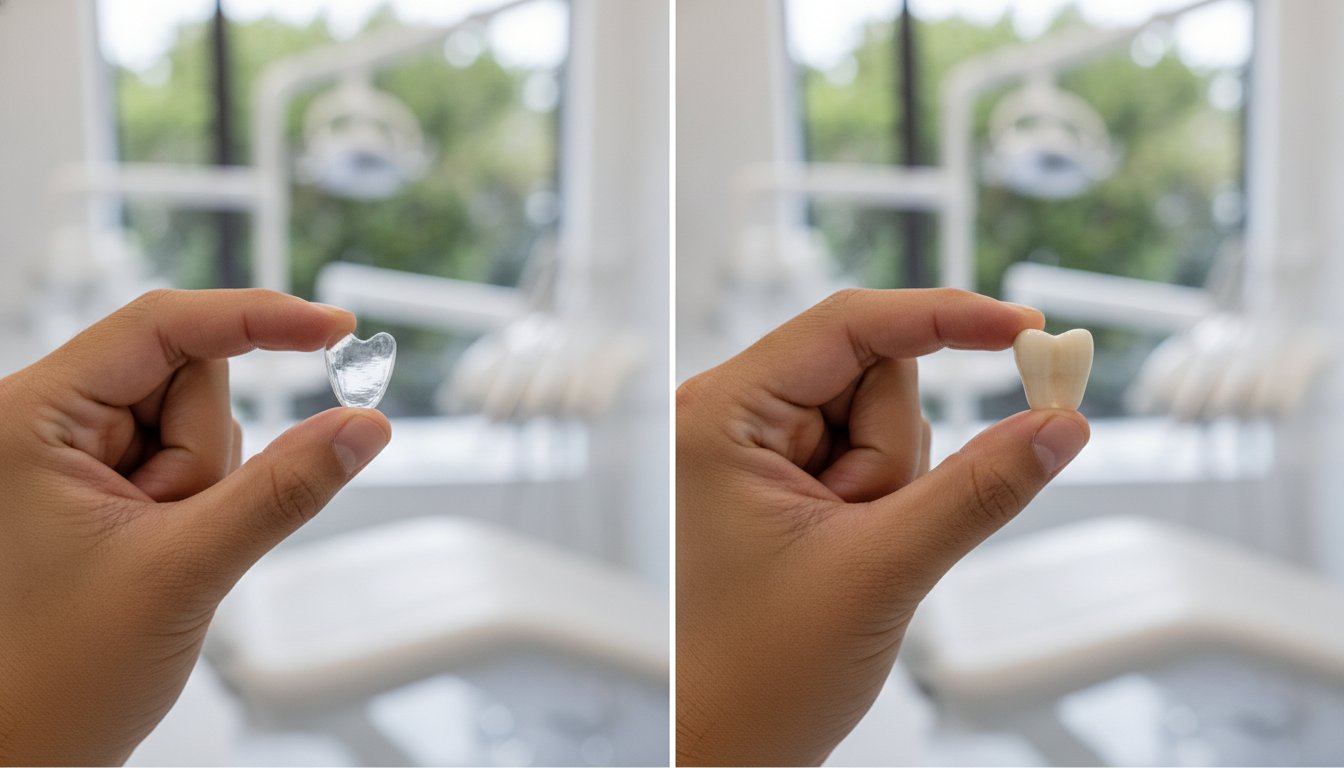
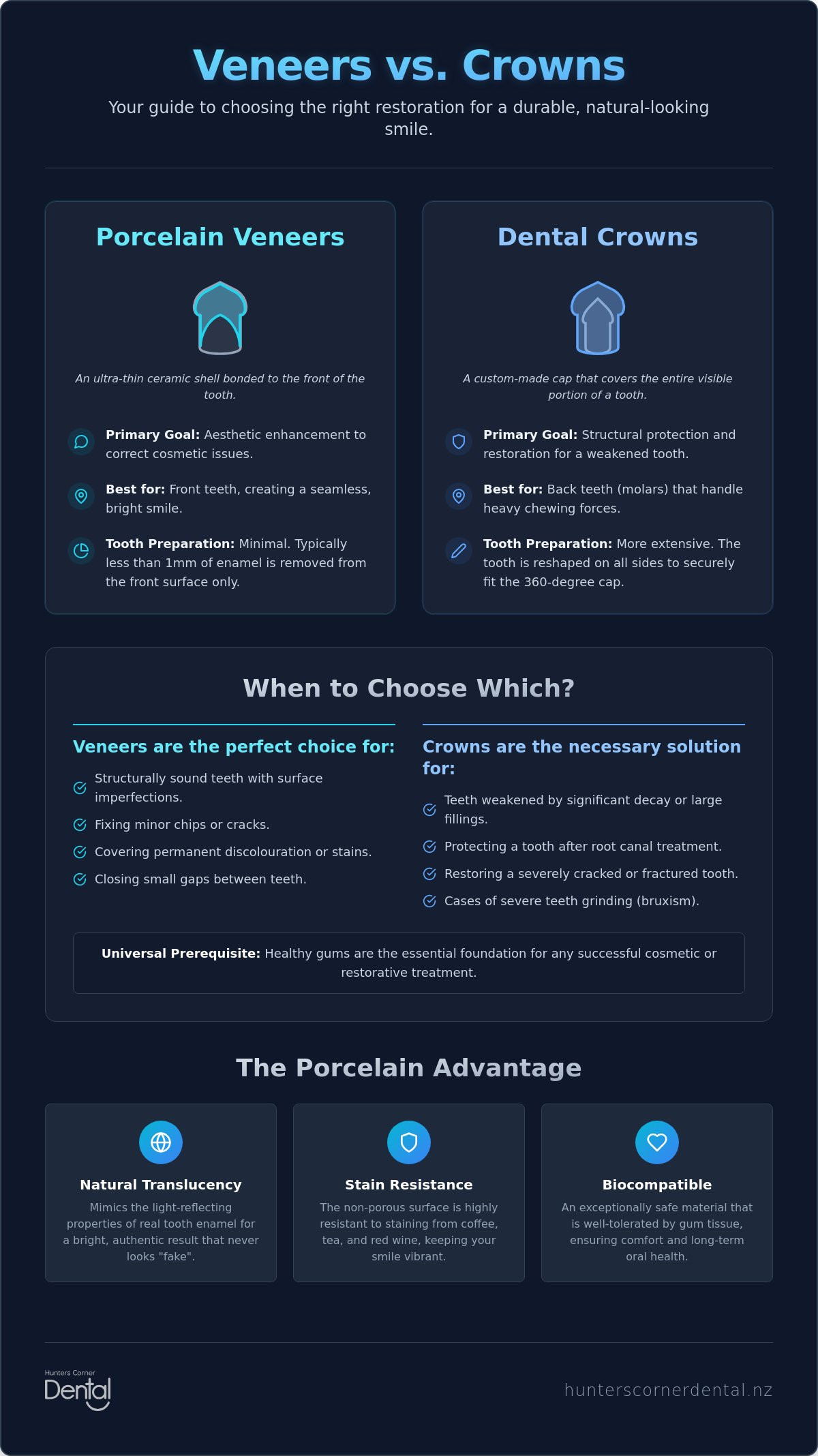
When you're exploring the best way to refresh your smile, the choice between veneers vs crowns usually depends on what your teeth need most: a new look or a stronger structure. What are porcelain veneers? Essentially, they are ultra-thin ceramic shells bonded directly to the front surface of your teeth. They act like a beautiful, durable facade. In contrast, a dental crown is a custom-made cap that fits over the entire visible portion of a tooth. While veneers are often the go-to for aesthetic changes, crowns are built for protection and strength. We prefer porcelain for these restorations because it is a biocompatible material that reflects light just like natural enamel.
The Aesthetic Benefits of Porcelain
Porcelain is the gold standard for cosmetic dentistry because of how it handles light. Unlike other materials, it has a natural translucency that mimics the depth of real teeth. This ensures your smile looks bright but never "fake". It's also incredibly resistant to stains. If you enjoy a morning flat white or a glass of red wine, porcelain won't absorb those pigments as easily as natural enamel or composite resin. This material is also a fantastic tool for closing small gaps. We can often use veneers to hide minor overcrowding or spaces without the need for traditional braces.
Who is an Ideal Candidate for Each?
Choosing between veneers vs crowns is a collaborative process that starts with looking at the current health of your teeth. With over 20 years of experience, we've found that the best results come from matching the treatment to the specific needs of the tooth. Candidates for each typically fall into these categories:
- Veneers are perfect for teeth that are structurally sound but have minor chips, permanent discolouration, or slight misalignments.
- Crowns are the necessary choice when a tooth has been weakened by significant decay, large old fillings, or a root canal treatment.
- Healthy gums are a prerequisite for any successful cosmetic treatment. We always ensure your foundation is healthy before we begin.
If you're curious about the investment required for these treatments in New Zealand, you can view our pricing guide to get a clearer picture of the costs involved. Whether you need a simple aesthetic lift or a full restoration, our goal is to make the process feel straightforward and manageable.
Veneers vs. Crowns: Key Differences and How to Choose
Choosing the right restoration involves more than just picking a shade of white. It's about matching the solution to the way you eat, speak, and smile. The fundamental choice between veneers vs crowns often rests on how much of your natural tooth structure remains healthy and where the tooth is located in your mouth. Where too little natural structure remains to support a crown, implant solutions often take over; you can discover Aesthetic Smiles to explore how modern clinics manage tooth replacement and restorative aesthetics. We want to ensure your result isn't just beautiful, but also stands up to the rigours of daily life.
Structural Integrity and Tooth Preparation
Veneers are widely considered the conservative choice for a smile makeover. To fit a veneer, we typically remove less than a millimetre of enamel from the front surface of the tooth. This preserves the strong, healthy core while giving it a fresh, uniform appearance. In contrast, dental crowns require more preparation because they provide 360-degree protection. While this sounds more involved, it's a supportive resolution for a tooth that has been weakened by a large cavity, a crack, or a past injury. Modern techniques allow us to be incredibly precise, ensuring we only remove what is absolutely necessary to secure the restoration and keep your tooth safe for years to come.
Making the Right Choice for Your Smile
Location plays a massive role in our recommendation. For your front teeth, veneers are the gold standard for creating a seamless, "red carpet" look. They handle light beautifully and require minimal intervention. However, for your back teeth, crowns are a better shout. These teeth do the heavy lifting when you're chewing, and they need the full-coverage strength that only a crown can provide. When weighing up veneers vs crowns, we also consider your daily habits, such as bruxism (teeth grinding). If you tend to clench or grind your teeth, especially during sleep, the thin edges of a veneer might be at risk of chipping. In these cases, a crown offers superior durability, and we might suggest a protective night guard to keep your investment safe.
Assessing your "bite", which is how your upper and lower teeth meet, is a crucial step we take during your consultation. If your teeth don't align perfectly, they can put uneven pressure on a restoration, leading to premature wear. By understanding your jaw alignment, we can ensure your treatment is functional and long-lasting. If you're ready to explore your options, book a friendly chat with our team to see which solution fits your lifestyle. We'll walk you through the process step-by-step so you feel completely at ease. You can also check our pricing guide to see how these options fit your budget.
Porcelain vs. Composite: Selecting the Best Material
Choosing the right material for your smile is just as important as deciding between veneers vs crowns. Most modern restorations use either porcelain or composite resin. While both can create a beautiful result, they offer very different experiences in terms of longevity and daily maintenance. We want you to feel confident in your choice, knowing it fits both your aesthetic goals and your lifestyle.
Composite resin is often a faster solution because it can be applied and shaped directly on your teeth in a single visit. It's a versatile material, but it doesn't quite match the enduring nature of porcelain. Porcelain is a high-grade ceramic that is custom-crafted in a laboratory to fit your tooth perfectly. Because of this meticulous process, porcelain typically lasts between 10 and 15 years with proper care. It offers a level of durability that composite simply can't match over the long term. Understanding the differences between veneers and crowns also means understanding how these materials behave under pressure and over time.
Colour stability is another major factor to keep in mind. Porcelain is non-porous, which means it resists staining from things like coffee, tea, or berries. Your restoration will stay the same shade for years. Composite resin, however, is more like natural enamel and will gradually pick up stains over time. This might lead to a mismatch between your restoration and your surrounding teeth if you aren't careful with your diet or hygiene habits.
The Cost-Value Equation
It's natural to look at the upfront price of dental work, but we encourage our patients to think about the "cost per year". Porcelain has a higher initial cost, but its low replacement frequency often makes it the more economical choice over a decade. Composite is more affordable today, but you may find yourself needing to replace or resurface it every few years. To help you plan, we've outlined our dental pricing and payment options to keep things transparent and stress-free.
Lifestyle and Maintenance Needs
Your daily habits often dictate which material will serve you best. If you're a dedicated coffee or tea drinker, porcelain's high stain resistance is a massive benefit. It keeps your smile bright without extra effort. For our younger patients, composite can sometimes be a better "reversible" first step. It allows us to preserve more of the natural tooth while they decide on a permanent look. While porcelain is much harder to chip, if a chip does occur, the entire unit usually needs replacing. Composite is easier to patch or repair on the fly, though it requires more frequent "buffing" to maintain its shine. We'll help you weigh these pros and cons during your consultation, ensuring the choice between veneers vs crowns and the material used is perfect for you.
The Treatment Journey: What to Expect at the Surgery
Deciding to transform your smile is a big step. It's completely natural to feel a mix of excitement and a few nerves. We believe that cosmetic dentistry shouldn't be intimidating. Our team focuses on a "smile design" process where you are the lead partner. We don't just tell you what you need; we work together to ensure the final result feels like you. This starts with a thorough consultation to check your oral health foundation. We need to ensure your gums and existing teeth are healthy before we begin any work—to learn more about identifying various oral health conditions, click here.
One common worry we hear is the fear of "shaving down" teeth. While both veneers vs crowns require some preparation, modern techniques are incredibly conservative. We only remove the tiny amount of enamel needed to make the restoration sit flush and look natural. If you're choosing veneers, this is often less than a millimetre. For crowns, we prepare the tooth to ensure the new cap is strong and secure. Our goal is always to preserve as much of your natural tooth as possible.
From Consultation to Preparation
Your journey begins with a comprehensive exam. We use digital imaging or moulds to get a perfect 3D picture of your current smile. This allows us to plan every detail before we even touch a tooth. Next, we perform a minimal preparation of the enamel. This ensures your new smile won't look bulky or feel out of place. Finally, we create temporary versions of your veneers or crowns. You'll never leave our surgery with gaps or unfinished teeth while your permanent restorations are being crafted in the lab.
Final Fitting and Bonding
The second visit is where the magic happens. We start with a "try-in" phase. This is your chance to see the colour and shape in person. We check them together to make sure they're exactly what you envisioned. Once you're happy, we move to permanent bonding. We use specialised dental adhesives and a light-curing process to secure the porcelain. This creates a rock-solid bond that feels just like a natural part of your mouth. If you're feeling a bit anxious about the process, you might find our guide to Stress-Free Dental Check-ups helpful for understanding our gentle approach.
We want you to feel informed about every part of your investment. You can always view our pricing and payment options to help you plan your makeover with confidence. Ready to take the first step toward a smile you love? Book a consultation with our friendly team today and let's discuss how we can help you achieve a natural, lasting result.
Longevity, Costs, and Finding the Right Care in NZ
Investing in a smile makeover is a significant financial decision. We understand that you want a result that lasts without breaking the bank. Whether you're weighing up veneers vs crowns, our focus is on providing affordable, friendly care for our whole community. As your friendly guide, we'll help you find a restorative solution that fits your budget and your long-term goals. With over 20 years of experience, we've seen how the right choice can transform someone's confidence, and we're here to make that journey feel straightforward and manageable.
Are There Subsidies for Veneers or Crowns?
In New Zealand, there are specific situations where you might get financial help. If your tooth was damaged in an accident, ACC may cover the cost of a crown or veneer. We are an ACC accredited provider, so we can help you navigate that claim and get your smile back on track. For those on a low income, WINZ dental grants are usually reserved for emergency work. They are always worth a chat for your overall oral health, however. We provide transparent, written quotes that you can take directly to WINZ or your private insurance provider to see what coverage is available to you.
Maintenance for a Lifetime Smile
To protect your ceramic investment, you need to adopt a few "no-worries" daily habits. First, never use your teeth as tools. That means no opening plastic packets or biting your nails. While porcelain is tough, it isn't indestructible. If you reckon you grind your teeth at night, a custom-fitted night guard is essential to prevent chips or cracks. It's also worth remembering that teeth whitening in NZ only works on natural enamel. If you want a brighter overall look, it's best to whiten your natural teeth before we match the shade of your new veneers vs crowns.
We believe that everyone deserves a smile they feel proud to show off. You can view our pricing guide for more details on the investment required for your care. We're here to make the process simple, honest, and entirely focused on your peace of mind. Let's work together to create a natural, lasting result that helps you feel like yourself again.
Start Your Journey to a Confident Smile
Deciding between veneers vs crowns is about more than just looks; it's about finding the right balance of strength and beauty for your unique smile. Remember that veneers are often the best shout for minor aesthetic tweaks, while crowns provide the essential protection a weakened tooth needs to thrive. By choosing high-quality materials and professional care, you're investing in a bright, natural result that can last for over a decade.
At Hunters Corner Dental, we've spent over 20 years helping our community feel at ease in the chair. As a WINZ registered provider and ACC accredited practice, we're committed to making restorative care accessible and straightforward for everyone. We'd love to help you explore your options in a warm, family-focused environment where your comfort is always the priority.
Book your smile consultation with our friendly team today and let's design a smile that helps you feel like yourself again. We're ready to partner with you on your path to better oral health and quiet confidence.
Frequently Asked Questions
How much do porcelain veneers cost in NZ?
The cost of cosmetic dentistry in New Zealand varies depending on the material used and the complexity of your specific case. Because every smile is different, we provide a detailed, written quote after your initial consultation. This ensures you have a clear understanding of the investment required for your unique makeover without any hidden surprises.
Is the porcelain veneer procedure painful?
You shouldn't feel any pain during the procedure because we use local anaesthetic to ensure the area is completely numb. Most patients only describe a sensation of light pressure or minor vibration while we prepare the enamel. We pride ourselves on creating a reassuring environment where your physical comfort is our top priority.
Can porcelain veneers be whitened if they get dull?
No, porcelain is a non-porous ceramic that does not respond to traditional whitening treatments. The good news is that porcelain is incredibly stain-resistant and holds its original colour for many years. If you're considering a brighter look, we recommend whitening your natural teeth before we finalise the shade of your new veneers.
What happens if a porcelain veneer chips or falls off?
If a restoration becomes loose or chips, contact our surgery immediately so we can assess the damage. If the veneer falls off in one piece, keep it safe, as we can sometimes rebond it to the tooth. When discussing veneers vs crowns, we often look at your bite to ensure your new restorations are protected from future damage.
Do I have to get veneers on all my teeth for a smile makeover?
Not at all, as we can place a single veneer to fix one problematic tooth or treat a full row for a complete transformation. Many of our patients choose to treat only the teeth that are visible when they smile. We focus on matching the colour and shape perfectly so the result looks entirely natural alongside your other teeth.
How long does the whole process take from start to finish?
The entire journey usually takes about two to three weeks across two main appointments. This timeframe allows our dental laboratory to meticulously craft your custom porcelain pieces to ensure a perfect fit. You'll wear high-quality temporary restorations during this period so you can smile and eat with confidence while you wait for the final result.
Can I still eat normally with porcelain veneers?
Yes, you can continue to eat most of your favourite foods once your permanent restorations are bonded in place. We simply suggest avoiding biting directly into very hard objects, such as ice or hard lollies, which could put unnecessary stress on the porcelain. Treat them with the same care as your natural teeth and they'll serve you well.
Is getting veneers reversible if I change my mind?
No, the process is not reversible because a small amount of natural enamel must be removed to ensure a flush, natural fit. This preparation is essential for the longevity and aesthetics of the restoration. Because enamel doesn't grow back, your teeth will always need the protection of either veneers vs crowns to stay healthy and functional.


