

You wake up at 3 am with a relentless, throbbing pain that radiates through your jaw and neck. There is a visible swelling on your gum and a bitter taste that just won't go away. When you're in this much discomfort, the last thing you want to worry about is a complex dental procedure or an unexpected bill. We understand that seeking dental abscess treatment nz can feel overwhelming, especially when you're exhausted and just want the pain to stop.
It's a stressful situation, but you don't have to face it alone. This article helps you identify the clear signs of an infection and explains why X-rays are such a vital tool for an accurate diagnosis. We'll walk you through the essential steps to achieve immediate relief and explore how you can access affordable care. Whether you need information on the WINZ Special Needs Grant, which can provide up to $1,000 for essential work, or ACC subsidies for injury-related care, we've got you covered. Discover how to manage your symptoms and take the first step towards a healthy, pain-free smile today.
Key Takeaways
- Learn how to recognise the warning signs of a dental infection, from persistent throbbing pain to visible swelling on the gums.
- Understand why dental X-rays are a non-negotiable tool for seeing the "unseen" and accurately diagnosing the depth of an abscess.
- Discover the proven steps for dental abscess treatment nz, including why professional drainage is the key to immediate, lasting relief.
- Explore practical ways to manage emergency costs, including how to check your eligibility for WINZ grants or ACC support.
- Find out how to transition from urgent pain management to a long-term care plan that protects your oral health for the future.
Recognising a Dental Abscess: More Than Just a Toothache
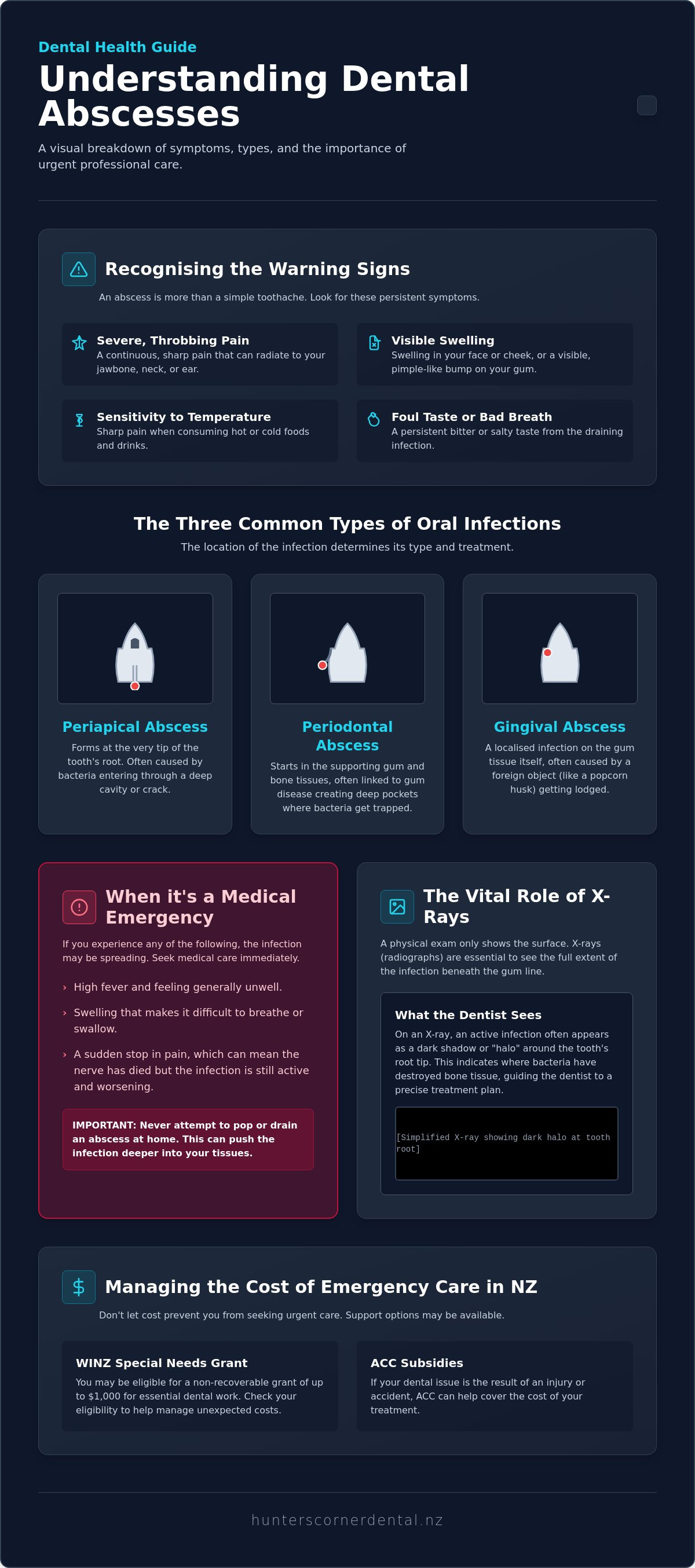
A dental abscess is a serious condition that demands immediate attention. Unlike a minor toothache that might come and go, an abscess is a persistent bacterial infection that results in a build-up of pus. You might find yourself asking, what is a dental abscess? Simply put, it is a pocket of infection that can form in different parts of the tooth or gums. While the physical pain can be unbearable, the true danger lies in the infection spreading to your jaw or even your bloodstream. According to the 2009 New Zealand Oral Health Survey, one in three adults has untreated tooth decay, which is often the precursor to these painful infections.
The symptoms are usually hard to ignore. You will likely experience a severe, throbbing pain that radiates to your jawbone, neck, or ear. Other red flags include facial swelling, sensitivity to hot and cold, and a persistent foul taste in your mouth. One of the most confusing and dangerous aspects of this condition is when the pain suddenly stops. You might feel a sense of relief, thinking the problem has resolved itself. This is often a sign that the tooth's nerve has died. While the "alarm bell" of pain has been silenced, the infection continues to thrive. Seeking professional dental abscess treatment nz is vital even if the ache subsides, as the bacteria can continue to destroy the surrounding bone.
The Three Common Types of Oral Infections
Not all abscesses are the same. A periapical abscess occurs at the tip of the tooth root. Bacteria enter the soft pulp through a deep cavity or a crack, eventually reaching the root tip. A periodontal abscess starts in the supporting bone and gum tissues, often linked to gum disease where bacteria become trapped in deep pockets. Finally, a gingival abscess is a localised infection strictly on the gum tissue. This is often caused by a foreign object, like a popcorn husk or a stray toothbrush bristle, getting lodged under the gum line.
When an Abscess Becomes a Medical Emergency
Certain symptoms indicate the infection is no longer localised and requires urgent intervention. If you experience a high fever, a general sense of being unwell, or swelling that makes it difficult to breathe or swallow, you must seek medical care immediately. These are signs the bacteria may be obstructing your airway or entering your bloodstream. Never attempt to "pop" or drain an abscess at home. Doing so can push the bacteria deeper into your facial tissues and significantly worsen the infection. Professional care is the only safe way to manage the pressure and start the healing process.
How We Diagnose Infections: The Vital Role of Dental X-rays
When you visit a clinic with the symptoms of a dental abscess, a physical examination is just the first step. Your dentist can see the outward signs like swelling or redness, but that is really just the tip of the iceberg. To provide effective dental abscess treatment nz, we need to see exactly what is happening beneath your gum line. This is where dental X-rays, also known as radiographs, become our most valuable tool. They allow us to look through the hard tissues of your teeth and jawbone to find the exact source of the infection.
An X-ray reveals the hidden damage that the naked eye simply cannot detect. It shows us if there is bone loss around the root of the tooth, which is a clear indicator of a long-standing infection. This imaging is crucial for determining if a tooth can be saved through root canal therapy or if it needs to be removed to protect your overall health. Many patients feel a bit uneasy about radiation, but modern digital imaging is incredibly safe. It uses a tiny fraction of the radiation compared to older film methods. The process is quick and provides immediate results, allowing us to create a plan for your relief without delay. Getting an accurate diagnosis early is also a smart financial move, as it helps avoid the costs of retreating a misdiagnosed issue. You can find more about our approach to emergency dental care and how we prioritise your comfort during these visits.
What the Dentist Sees on a Radiograph
On a digital X-ray, an active infection typically appears as dark shadows or "halos" around the tip of the tooth root. These dark areas show where the bacteria have begun to break down the surrounding bone. We also use these images to check the proximity of the abscess to your jawbone or sinus cavities. This level of detail is essential for planning a precise treatment path. It ensures we can target the infection accurately while keeping the surrounding healthy structures safe.
Diagnostic Steps Beyond the Image
While X-rays provide the "map," we use other tests to confirm the diagnosis. We might perform percussion testing, which involves gently tapping the tooth to check for sensitivity. If the tooth is tender to a light touch, it often confirms inflammation at the root. Thermal testing is another common step; we check how the tooth pulp reacts to hot or cold to see if the nerve is still functioning. Finally, periodontal probing helps us check for deep gum pockets. This helps us distinguish between an infection starting inside the tooth and one starting in the gums, ensuring you get the right care from the start.
Treatment Pathways: From Antibiotics to Restoration
Once we have diagnosed the infection, the focus shifts immediately to your comfort and long-term health. Effective professional dental abscess treatment begins with addressing the source of the bacteria rather than just masking the symptoms. Many patients hope that a course of antibiotics will solve the problem entirely. While medication is a helpful ally, it cannot physically remove the pocket of infection. The primary goal of dental abscess treatment nz is to drain the abscess and eliminate the infection to prevent it from returning or spreading further.
The first step in providing relief is often professional drainage. Your dentist will carefully make a small incision into the abscess to allow the pus to escape. This procedure significantly reduces the intense pressure that causes the characteristic throbbing pain. Following this, the treatment path depends on the extent of the damage. If the tooth can be saved, root canal therapy is the standard approach. This involves removing the infected pulp from the centre of the tooth, cleaning the canals, and sealing them to prevent future bacterial entry. It's a precise process that allows you to keep your natural smile intact.
Root Canal Therapy vs. Extraction
Saving your natural tooth is always our first priority. Keeping your own tooth helps maintain your jawbone structure and prevents the surrounding teeth from shifting out of place. After a root canal, we usually recommend a dental crown to protect the remaining tooth structure, which can become brittle over time. However, if the tooth is severely fractured or the bone loss is too extensive, an extraction may be the most predictable and cost-effective choice. Removing the tooth ensures the infection is completely gone, and we can then discuss options like implants or bridges to restore your bite. You can view more about the costs associated with these options on our pricing page.
The Role of Medication in Recovery
Antibiotics are used as a supportive tool, particularly if the infection shows signs of spreading to your jaw or if you have a weakened immune system. It's vital to remember that antibiotics are not a standalone cure for an abscess. They help your body's natural defences manage the bacteria while the physical treatment does the heavy lifting. We also recommend managing any post-procedure tenderness with over-the-counter pain relief like paracetamol or ibuprofen. Always finish the full course of any prescribed medication, even if you feel significantly better after the first few days. Stopping early can allow the strongest bacteria to survive, potentially leading to a more stubborn infection later on.
Managing the Cost of Emergency Dental Care in NZ
Facing a dental emergency is stressful enough without the added worry of how to pay for it. We understand that the cost of dental abscess treatment nz can be a significant concern for many Kiwi families. In New Zealand, while basic dental care is free for those under 18, adults usually need to pay for private treatment. However, there are several support systems in place to ensure you don't have to live with unbearable pain just because of your bank balance. We believe in being open and honest about our fees. You can always check our dental pricing and quotes to get a clearer picture of what to expect before you even step through the door.
Recent data from the New Zealand Dental Association shows that the cost of routine visits has been rising steadily, with a further 3.7% increase throughout 2025. This makes understanding your financial options more important than ever. Whether it's through government grants or accident cover, there are ways to make urgent care more manageable. Our goal is to focus on your relief first and help you navigate the paperwork later. We're here to act as a supportive partner in your health journey, making a potentially scary situation feel straightforward and manageable.
How to Get a WINZ Dental Quote
If you are on a low income or receiving a benefit, you might be eligible for a Work and Income (WINZ) Special Needs Grant. As of July 2026, this grant can provide up to $1,000 per 52-week period for immediate and essential dental treatment. This is a non-repayable grant, which means you don't have to pay it back. To start the process, you'll need to visit a registered dentist for an assessment. We can provide you with a formal quote that details the necessary emergency work. You then take this quote to WINZ for approval. It’s a simple way to get the relief you need without the immediate financial burden.
ACC Claims for Dental Infections
Sometimes, an abscess isn't just about decay. It might be the result of a cracked tooth from an old sports injury or a sudden trip and fall. If your infection is linked to an accident, ACC may cover a portion of your treatment costs. Your dental provider will help you file the claim during your appointment. It is worth remembering that ACC usually pays a set contribution, so there might still be a surcharge or "gap" payment required to cover the full cost of the procedure. We can help you understand these costs upfront so there are no surprises. If you're experiencing pain and are worried about the cost, please contact us for a clear quote so we can help you explore your financial options.
Taking the Next Step: Relief and Recovery
When you are in the middle of a dental emergency, your first priority is simply getting out of pain. We understand that focus entirely. Once the initial dental abscess treatment nz is complete and that relentless throbbing has subsided, you will likely feel a massive sense of relief. It is a turning point in your health journey. However, the period immediately following emergency care is the most important time to look forward. While the immediate threat is gone, the goal now shifts to making sure the infection never finds its way back into your life.
Acting quickly at the first sign of trouble is the best way to avoid more complex oral surgery or long-term complications. If you have been putting off a visit due to nerves, you aren't alone. Many Kiwis feel a bit of "dentist dread," especially after a painful experience. We focus on providing a supportive, gentle environment to help you move past that. A stress-free dental check-up is a vital part of this process. It allows us to monitor your healing and ensure your smile stays healthy and resilient for years to come.
Preventing Future Abscesses
The best way to manage a dental infection is to stop it before it starts. Most abscesses are the result of untreated cavities that have been allowed to reach the inner pulp of the tooth. Regular teeth cleaning, including scaling and polishing, is your best defence. This process removes the hardened plaque and bacteria that your toothbrush simply can't reach, protecting your gums from periodontal infections. We also suggest a few simple dietary changes. Reducing the "fuel" for bacteria, such as sugary snacks and acidic drinks, can significantly lower your risk of future decay. It's about small, manageable habits that lead to big results for your oral health.
Your Journey to a Healthy Smile
We pride ourselves on being a friendly guide for our community. If you have been avoiding the dentist for years, we won't judge you. Our team is here to listen to your concerns and provide a reassuring space for your recovery. Once the initial infection is cleared, we can work together to create a plan for any restorative work you might need, like tooth fillings or dental crowns. This step-by-step approach ensures you never feel overwhelmed by the process. Don't wait for the pain to return before taking action. Book your consultation today for professional, friendly care that puts your peace of mind first.
Take the First Step Toward a Pain-Free Smile
A dental abscess is more than just a temporary discomfort; it's a sign that your body needs professional help. By recognising the symptoms early and understanding the vital role of digital imaging, you can take the guesswork out of your recovery. Whether your path involves drainage, a root canal, or an extraction, the focus is always on providing immediate relief and preserving your natural smile whenever possible.
We know that the financial side of emergency care can be daunting. That's why we're proud to be an accessible and affordable family-focused practice. As a WINZ registered dentist, we can provide the formal quotes you need for support, backed by over 20 years of experience in restorative care. Accessing quality dental abscess treatment nz should be straightforward and stress-free. Don't let a small infection become a major problem. Contact our friendly team for urgent dental care today. We're here to help you feel like yourself again.
Common Questions About Dental Abscesses
Can a dental abscess go away on its own?
No, a dental abscess will not resolve without professional intervention. It is a persistent bacterial infection that requires a dentist to physically drain the pus and remove the source of the bacteria. If your pain suddenly disappears, it doesn't mean the infection is gone; it often indicates that the tooth's nerve has died while the bacteria continue to damage the surrounding bone.
Will antibiotics alone cure my tooth infection?
Antibiotics are a supportive tool, but they are not a standalone cure for a tooth infection. While they help manage the spread of bacteria, they cannot reach the source of the infection trapped inside the tooth or gum pockets. Effective dental abscess treatment nz always requires a physical procedure, such as professional drainage or root canal therapy, to eliminate the infection for good.
How much does dental abscess treatment cost in New Zealand?
The cost of treatment varies depending on whether the tooth can be saved with a root canal or if it needs to be extracted. A simple extraction is usually the most cost-effective immediate option, while restorative work like crowns involves a higher investment. We recommend exploring the WINZ Special Needs Grant or ACC subsidies to help manage the costs of emergency care if you are eligible.
What happens if I leave a dental abscess untreated?
Leaving an abscess untreated can lead to serious health complications, including the loss of the tooth and the surrounding jawbone. The infection can also spread to other parts of your body, such as your neck or bloodstream, which can become life-threatening. Acting quickly is the best way to prevent the need for more complex and expensive oral surgery in the future.
Can I go to the hospital for a dental abscess?
You should go to a hospital emergency department if you experience severe symptoms like difficulty breathing, trouble swallowing, or a high fever. While hospital staff can provide immediate pain relief and manage spreading infections, they don't usually perform dental procedures. You will still need to follow up with a dentist to treat the tooth itself and prevent the infection from returning.
Is a root canal painful when you have an abscess?
No, the procedure itself is designed to provide relief from the intense pain of the infection. We use local anaesthetic to ensure the area is completely numb before we start any work. Most patients find that the throbbing pressure disappears almost immediately once the abscess is drained. Our goal is to make the experience as comfortable and stress-free as possible.
How long does it take for swelling to go down after treatment?
You can expect visible swelling to start subsiding within two to five days after your treatment. Most patients notice a significant improvement in the first 48 hours once the source of the infection is removed. We'll provide clear aftercare instructions and may suggest over-the-counter paracetamol or ibuprofen to help you stay comfortable while your body heals.
Can children get dental abscesses?
Yes, children can develop abscesses from deep decay or if a tooth is damaged during play or sport. It's vital to seek professional care immediately to prevent the infection from affecting the permanent teeth developing underneath. Remember that basic dental care is free for children and adolescents in New Zealand until their 18th birthday through the public health system.


