

What if the most vital part of saving your tooth happens after you leave the clinic? Most people feel a massive sense of relief once their treatment is over, but that's often when the real worry kicks in regarding your root canal aftercare. You might be concerned about that post-numbness throbbing or feel nervous that your temporary filling won't stay put while you eat. It's completely normal to feel protective of your smile during this stage.
The good news is that managing your recovery is simple when you have a clear plan. This guide will help you master the healing process with practical tips on pain management, diet, and protecting your tooth so it lasts a lifetime. We're here to make sure your journey back to a healthy smile is as smooth and comfortable as possible.
We'll walk you through exactly how to handle discomfort, what to eat to avoid damage, and how to manage multi-stage appointments with confidence. By the end, you'll have all the instructions you need to keep your natural tooth healthy, functional, and pain-free.
Key Takeaways
- Wait for the local anaesthetic to wear off completely before eating to prevent accidental bites or burns to your mouth.
- Master your root canal aftercare by using a recommended combination of pain relief to manage any initial tenderness comfortably.
- Stick to soft tucker for the first few days and steer clear of crunchy or sticky foods like pork crackling or chewy lollies.
- Understand why a dental crown is the essential final step to protect your tooth from becoming brittle and ensure its long-term survival.
- Identify the specific red flags, such as gum swelling, that indicate it’s time to give your dentist a bell for a follow-up.
The First 24 Hours: Protecting Your Root Canal Treatment
You have just finished your Root canal treatment and the hardest part is officially behind you. While you might feel like celebrating with a good meal, the first day is a vital period for your root canal aftercare. Your mouth needs a little time to settle, and your new temporary filling requires a bit of "TLC" to stay secure. Taking it easy for these first 24 hours ensures the foundation of your recovery is solid.
Navigating the "Numb Zone"
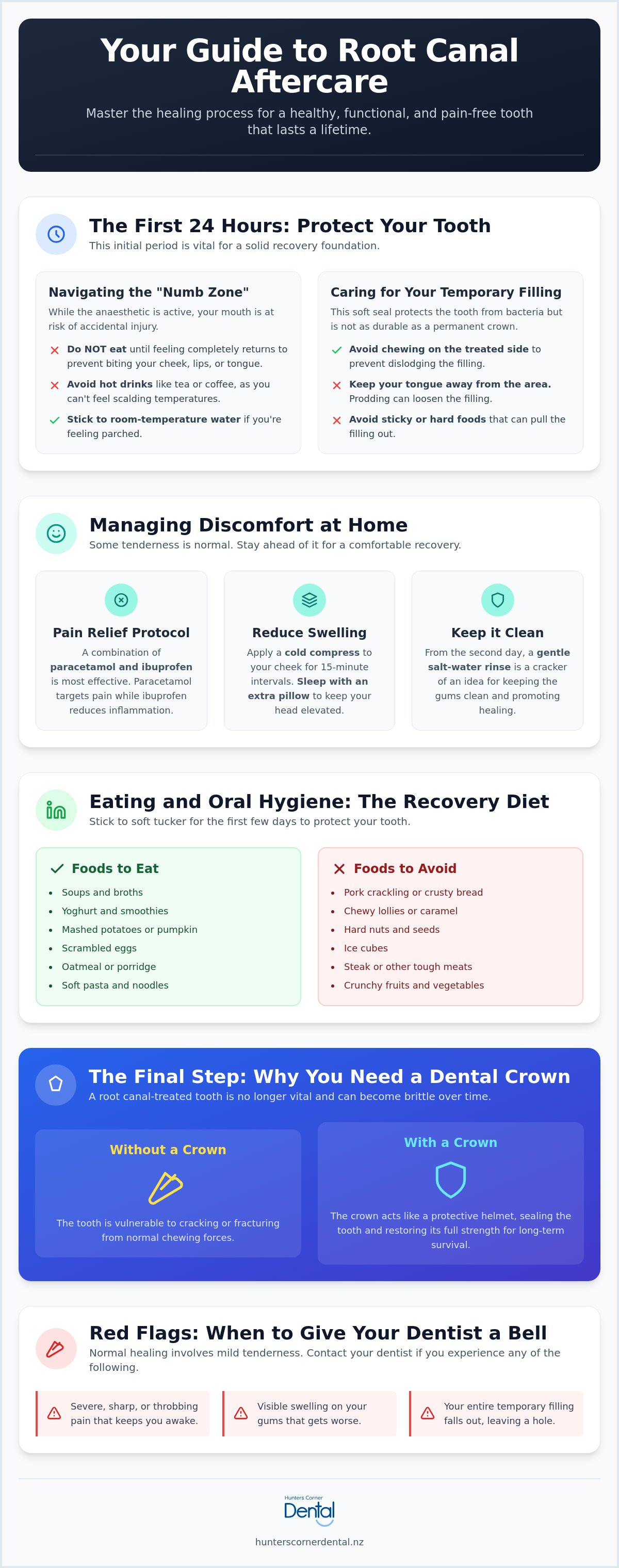
The local anaesthetic used during your procedure can last for several hours. This "numb zone" is when you are most at risk of accidental injury. Because you cannot feel your lips, cheeks, or tongue, it is very easy to bite down too hard or burn yourself without knowing it. We recommend waiting until the feeling has completely returned before you try to eat any solid food. If you are feeling parched, stick to room-temperature water. Avoid hot tea, coffee, or soup until the numbness has faded, as you won't be able to tell if the liquid is scalding your mouth.
Try these simple steps while the anaesthetic is still active:
- Avoid chewing on the treated side of your mouth to prevent cheek-biting.
- Check your reflection before heading out to ensure you aren't accidentally drooling.
- Rest your jaw and avoid unnecessary talking if you can.
Caring for Your Temporary Filling
Your dentist likely placed a temporary filling to seal the tooth. This material is a soft, protective barrier designed to keep bacteria out of the canal until your next appointment. It is not as durable as a permanent crown or your natural enamel. Treat it with heaps of care. It is quite common for a tiny layer of the filling to wear away or feel slightly gritty as you swallow; this is normal and usually nothing to worry about.
The temporary seal must remain mostly intact to do its job. Keep your tongue away from the area. While it is tempting to explore the site with your tongue, this can accidentally dislodge the medicine or the filling itself. If the entire filling pops out or if you feel a large hole where it used to be, give us a bell immediately. Leaving the canal exposed to your saliva can lead to reinfection, which is something we definitely want to avoid for a smooth root canal aftercare experience.
Avoid any sticky or hard foods during this first day. Even if the numbness has worn off, your temporary filling is still vulnerable to being pulled out by something like a lolly or a piece of crusty bread. Patience now prevents problems later.
Managing Discomfort and Pain Relief at Home
As the anaesthetic begins to fade, it is normal to experience some tenderness around the gum. Your body is working hard to heal the space where the infection once lived. This phase of root canal aftercare is about keeping you comfortable while your natural defences do the heavy lifting. You might notice a dull ache or a bit of sensitivity when you accidentally touch the tooth, but this usually settles within a few days. Staying ahead of the discomfort rather than waiting for it to become a nuisance is the key to a stress-free recovery.
The Best Pain Relief Protocol
We recommend stocking up at your local chemist before your appointment so you have everything ready to go. A combination of paracetamol and ibuprofen is often the most effective way to manage post-treatment sensations. While paracetamol works on your pain receptors, ibuprofen is specifically helpful for reducing inflammation at the root tip. This dual approach covers all bases. Don’t wait for the pain to get "bad" before taking your first dose. Always follow the specific post-treatment care instructions provided by your dentist or the directions on the medication packet.
Reducing Swelling Naturally
If you notice a little bit of puffiness, there are plenty of ways to settle it down without extra medication. Using a cold compress on the outside of your cheek is a reliable method. Apply it for 15-minute intervals during the first evening to keep any inflammation in check. When you head to bed, try sleeping with an extra pillow to keep your head slightly elevated. This simple trick reduces blood pressure in the head and can significantly lower that "throbbing" feeling. From the second day onwards, a gentle salt-water rinse is a cracker of an idea for keeping the gums clean and healthy.
It is important to understand the difference between normal healing and a potential issue. Feeling pressure when you bite down slightly is expected. However, if you experience sharp, throbbing pain that keeps you awake at night, or if you see visible swelling on your gums, please give us a bell. Effective root canal aftercare relies on clear communication, so never hesitate to ask a question if something feels off. If you are ever unsure about the next steps or want to check our pricing for follow-up care, our team is always happy to help. Most patients find that with a bit of rest and the right protocol, they are back to feeling like themselves in no time.
Eating and Oral Hygiene: The Recovery Diet
What you put on your plate during the first few days can make or break your comfort levels. For at least the first 48 to 72 hours, you should stick to soft tucker. This gives the inflammation around the tooth a chance to settle without being aggravated by heavy chewing. Proper root canal aftercare isn't just about what you do; it's about what you avoid. Steer clear of anything crunchy, sticky, or hard. That means no pork crackling, crusty bread, or chewy lollies until your permanent crown is fitted. These foods can easily crack a brittle tooth or yank out your temporary filling.
Soft Food Ideas for Aussie & Kiwi Patients
You don't have to live on water alone. There are plenty of filling options that are easy on your smile. Mashed spuds with a bit of butter, scrambled eggs, and smoothies are all great choices. If you're craving something warm, go for a lukewarm soup rather than something piping hot. For a bit of a treat, yoghurt or custard is a safe bet. If you really can't resist a proper meal, try cutting your food into tiny bits and chewing exclusively on the opposite side of your mouth. This simple habit keeps the pressure off the treated site while you heal.
Keeping the Treatment Area Clean
Bacteria is the primary enemy of a successful result. Even though the inside of the tooth has been cleaned, the surrounding gums and neighbouring teeth still need protection. Gentle brushing with a soft-bristled toothbrush is the way to go. Don't skip the area; just be mindful of the pressure you apply. Using light, circular motions will keep the site clean without irritating the sensitive gum tissue. Understanding these small details is a big part of successful Root Canal Recovery.
For flossing, there is a specific trick to avoid accidents. Instead of popping the floss back up through the teeth, which can catch the edge of your filling, pull it out sideways. By sliding the floss out through the side of the gap, you remove debris without putting upward pressure on the temporary filling. This protects the seal and keeps the canal safe from contamination. Maintaining a clean environment is vital for your root canal aftercare. If you're ever worried about the cost of future appointments or check-ups, you can always view our pricing for dental services online to help you plan your next visit.
The Final Step: Why You Need a Dental Crown
Once you have managed the initial sensitivity, it's time to look at the big picture of your root canal aftercare. While the pain is gone, the tooth itself has changed in a fundamental way. During the treatment, the infected pulp and the blood supply are removed. This means the tooth no longer receives the nutrients it needs to stay flexible. Over time, it can become quite brittle and glass-like. Without the proper support, a tooth that has had a root canal is much more likely to fracture or split when you bite down on something hard.
This is where a permanent dental crown comes in. Think of it as a custom-fitted helmet for your tooth. It wraps around the remaining structure, holding everything together and absorbing the pressure of chewing. Skipping this final restoration is the number one reason root canals eventually fail. A temporary filling is only a stop-gap; it's designed to last a few weeks at most. If you leave it too long, the filling can leak, letting bacteria back into the canal and undoing all the hard work we've done to save your smile.
Stage 2 and 3 of Your Treatment
Most root canal treatments aren't a one-and-done situation. It usually takes two or three visits to ensure the infection is 100% gone and your tooth is fully protected. The first visit focuses on clearing out the trouble, while the following appointments are about confirming the tooth is stable and fitting your permanent crown. You'll find that these final visits are usually much easier and faster than the initial treatment. There is no more infection to deal with, just the satisfying process of making your tooth strong again so you can get back to eating your favourite foods without worry.
Budgeting for Your Permanent Smile
We know that quality dental work is a significant investment in your long-term health and confidence. Our goal is to make this process as straightforward and transparent as possible. You can check out our pricing and payment options to help plan your next steps. We also work with ACC and WINZ for eligible treatments, ensuring that everyone in our community can access the care they need without unnecessary stress. Protecting your natural tooth now is much more cost-effective than replacing it later with an implant or bridge. If you're ready to finish your treatment journey, feel free to book your crown appointment with our friendly team today.
Red Flags: When to Give Your Dentist a Bell
Most patients find that their recovery is quite straightforward. It is completely normal for the area to feel a bit "different" for a few days as the tissues settle down. If you follow the rules regarding diet and medication, she'll be right in no time. However, part of effective root canal aftercare is knowing when a sensation is just part of healing and when it is a sign that you need a professional look-over. We want your recovery to be as smooth as possible, so being aware of these red flags helps us catch any minor issues before they become real dramas.
Normal Healing vs. Complications
Distinguishing between typical post-treatment tenderness and a complication is fairly simple once you know what to look for. A dull, manageable ache that gradually fades over two or three days is exactly what we expect to see. On the other hand, sharp or stabbing pain that keeps you awake at night or doesn't respond to paracetamol is not normal. You might also notice a slightly medicinal or weird taste in your mouth. This is often just a tiny bit of the medicated filling material and usually isn't a cause for concern. If the taste is accompanied by a sudden increase in pain, it's worth a quick call to the clinic just to be sure everything is still sealed tight.
Another common thing to watch for is how your teeth fit together. If your bite feels "high" or uneven, the temporary filling might need a quick tweak. Even a tiny fraction of extra height can cause the tooth to take too much pressure when you chew, leading to unnecessary inflammation and pain. This is a very easy fix that takes only a few minutes in the chair, so don't feel like you have to put up with it.
Emergency Contact and Next Steps
While modern treatments have a success rate of over 95%, your body's response can sometimes be unpredictable. There are a few specific signs that mean you should contact us immediately. Visible swelling on the inside or outside of your gums is a clear signal that the area needs attention. Similarly, if you notice a small, pimple-like bump on the gum near the treated tooth, or if you develop a fever, please give us a bell straight away. These symptoms can suggest that a bit of stubborn infection is still hanging around and needs a different approach.
Remember that the goal of your treatment was to save your natural tooth and get you back to a pain-free life. Most patients are completely comfortable within a week of their procedure. Once your root canal is finished and your permanent crown is fitted, your focus will shift back to general maintenance. To ensure the rest of your smile stays just as healthy, you can read more about Why Regular Dental Check-ups Are Essential. We are always here to support your journey toward a healthy, confident smile.
Ready to Secure Your Healthy Smile?
Your journey to a pain-free smile is almost complete. By following a clear root canal aftercare plan, you are giving your tooth the very best chance at a long and functional life. Remember to stay on top of your pain relief early, choose soft tucker while you heal, and treat that temporary filling with plenty of care. These simple steps make a world of difference in your recovery and ensure the foundation of your tooth remains solid.
The ultimate goal is a permanent restoration that lets you eat, speak, and smile with total confidence. With over 20 years of experience in restorative care, our friendly, community-focused team is here to guide you through the final steps. We are also ACC and WINZ registered to ensure your treatment remains accessible and stress-free for everyone in our local area. Taking care of the "home stretch" now prevents bigger issues down the track.
Ready to finish your recovery? Book your follow-up or permanent crown fitting with our friendly team today! We look forward to seeing you back in the clinic and getting your smile back to its absolute best.
Common Questions About Your Recovery
How long does the pain last after a root canal treatment?
Most patients experience mild tenderness for about two to three days following the procedure. This is a normal part of the healing process as the tissues around the tooth settle down. You can usually manage this discomfort easily with the pain relief protocol we recommended. If you find the pain is still sharp or getting worse after a week, it is best to give us a bell for a quick check-up.
Can I go back to work or school straight after the procedure?
You can generally return to your normal routine immediately after leaving the clinic. Most people head back to work or school without any dramas, provided they feel up to it. Just keep in mind that your mouth will stay numb for a few hours, which can make speaking or drinking a bit tricky. If your job involves heavy physical labour, you might prefer to take it easy for the rest of the day.
What happens if my temporary filling falls out over the weekend?
Don't panic if your temporary filling pops out when we are closed. Keep the area as clean as possible by gently rinsing with warm salt water after you eat. You can often find temporary dental cement at a local chemist to bridge the gap until Monday. Give our team a call as soon as we open so we can get you back in to reseal the tooth and protect the canal from bacteria.
Why does my jaw feel sore even though the tooth nerve is gone?
Jaw soreness is typically caused by the muscles being held open during the treatment or inflammation in the ligaments surrounding the tooth. While the nerve inside the tooth is removed, the sensory nerves in the surrounding bone and gums are still active. This pressure sensitivity is a standard part of root canal aftercare and should settle within a few days as the inflammation goes down.
Can I smoke after having a root canal?
We strongly recommend avoiding smoking for at least 24 to 48 hours after your treatment. Smoking reduces the oxygen levels in your bloodstream, which can significantly slow down the healing process and increase your risk of infection. If you are finding it difficult to stop, try to wait as long as possible to give the treated area the best chance to stabilise without irritation.
Is it normal for the tooth to change colour after treatment?
It is quite common for a tooth to take on a slightly greyish or darker tint once the internal pulp has been removed. Because the tooth no longer has a blood supply, the internal structure can change in appearance over time. This is one of the many reasons why fitting a porcelain crown is a cracker of an idea, as it hides any discolouration and makes the tooth look completely natural again.
How long do I have to wait before getting the permanent crown?
You will usually wait between one and two weeks before your permanent crown is fitted. This time frame allows your dentist to be certain that the tooth is comfortable and the infection has been successfully cleared. Completing this final step is the most important part of your root canal aftercare, as it provides the long-term strength needed to prevent the tooth from cracking.
Does ACC cover root canal treatment if the tooth was broken in an accident?
ACC often provides a contribution toward the cost of a root canal if the treatment is required due to an accidental injury. You will need to have a claim lodged and accepted for the specific tooth involved. While ACC may not cover the full fee for every restoration, it can significantly reduce your out-of-pocket costs. We can help you navigate the paperwork to ensure you get the support you are entitled to.


