

What if the most critical part of your dental implant journey doesn't actually happen in the surgery chair? While the clinical work sets the foundation, the way you manage your recovery at home determines whether that new smile truly lasts a lifetime. It is completely normal to feel a bit anxious about the healing process or worry about the risk of infection. You simply want to ensure your investment is protected and that the bone bonds perfectly to the implant without any unnecessary discomfort.
We are here to help you navigate dental implant aftercare with confidence and ease. This guide provides a clear, expert roadmap for your recovery; covering everything from those first crucial hours to long-term maintenance a decade down the track. You will learn which cleaning products are safe for titanium and how to recognise the difference between normal healing and a red flag. We will also explain how to keep your gums in top shape so that looking after your new tooth feels like second nature.
Key Takeaways
- Mastering your dental implant aftercare begins with a structured 7-day roadmap to manage initial swelling and protect the developing blood clot.
- Learn how to support osseointegration, the vital process where your jawbone forms a permanent biological bond with your new implant.
- Discover why choosing ultra-soft cleaning tools and non-abrasive toothpastes is essential for keeping your titanium components scratch-free.
- Understand how to protect the delicate seal of your gums to prevent infection and keep your restoration secure for the long haul.
- Find out how regular professional check-ups and potential ACC support for accident-related care can make your ongoing maintenance stress-free.
Why Dental Implant Aftercare is the Secret to a Lifelong Smile
Your surgery was a success. Now, the real work begins at home. Dental implant aftercare is the dedicated period where your jawbone and the new titanium post become one. For a comprehensive overview of dental implants and how they function, it's helpful to understand that they aren't just "screwed in." They rely on a process called osseointegration. Think of this as a "biological hug" where your bone cells literally latch onto the implant surface to create a rock-solid foundation.
Taking this phase seriously is about more than just comfort. It's about protecting your financial investment. While the initial cost of the procedure reflects the high level of skill and technology involved, a well-maintained implant can last decades. Neglecting your dental implant aftercare could lead to complications that require expensive corrective surgery or even a full replacement. We want to help you get it right the first time.
Care happens in two distinct stages. First, there's the immediate recovery window where we focus on healing and bone fusion. Second, there's the lifelong maintenance phase where you keep the surrounding tissues healthy. Both are equally vital for a lasting result. As highlighted by complex restorative institutions such as Clínica Loyola, structured post-procedure care is universally recognised as essential to protecting your clinical investment and ensuring long-term success.
The Risk of Neglect: What is Peri-implantitis?
Implants are made of titanium and porcelain, so they can't develop traditional cavities. However, the living tissue around them is still at risk. Peri-implantitis is a specific type of gum disease that attacks the bone supporting your implant. Look out for red, puffy gums or a slight bleeding when you brush. Unlike natural teeth, which are held by a flexible ligament that acts like a shock absorber, implants are fused directly to the bone. This means once an infection starts, it can reach the bone quite quickly if you don't act.
The Partnership Approach to Recovery
You aren't in this alone. We view the first few months as a close partnership between you and our clinical team. Success rates for these procedures are exceptionally high when the right steps are followed. While you might feel some minor "settling in" sensations as things heal, we are always here to guide you through the process. By combining our professional expertise with your diligent home care, you can look forward to a smile that feels and functions just like the real thing.
The Critical Recovery Window: Your 7-Day Aftercare Roadmap
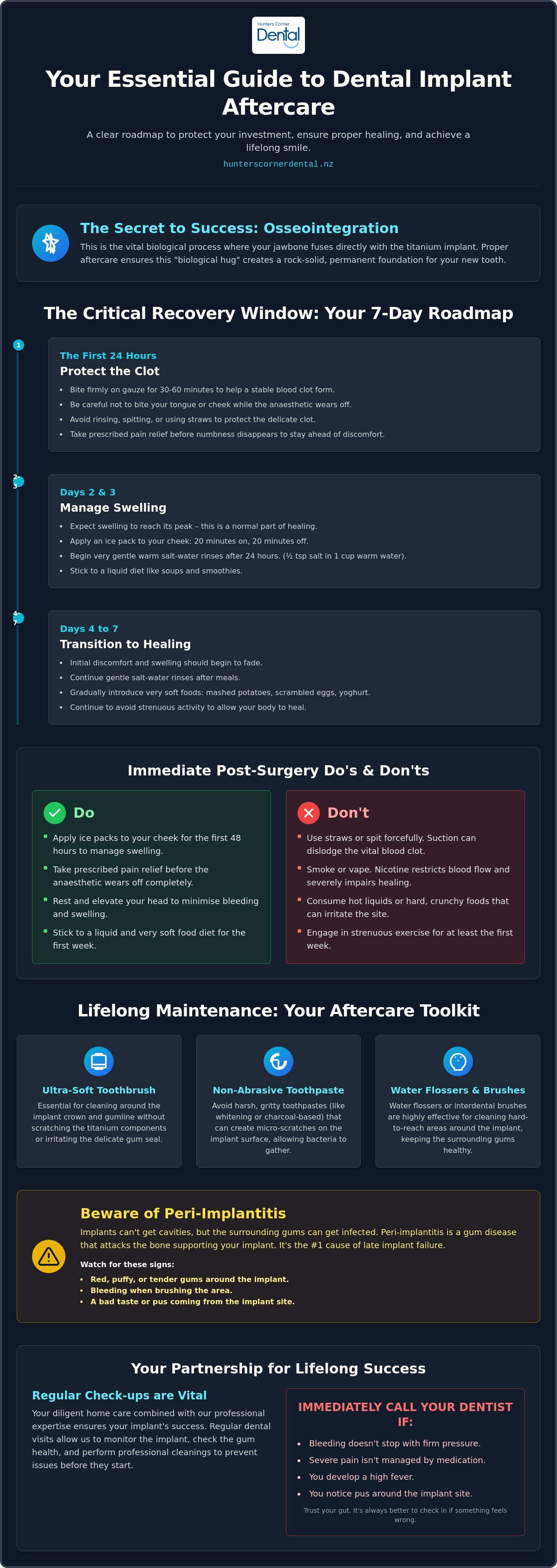
The first seven days are the most important for your dental implant aftercare. This week is all about protecting the surgical site while your body begins its natural healing process. During the first 24 hours, your main priority is managing the anaesthetic numbness. Be very careful not to bite your tongue or cheek while the area is still "asleep." You will need to bite firmly on the provided gauze for about 30 to 60 minutes to help a stable blood clot form.
By days two and three, you will likely notice that swelling reaches its peak. This is a normal part of the inflammatory response and isn't a cause for alarm. You can start very gentle salt-water rinses after the first 24 hours have passed. Use a cup of warm water with half a teaspoon of salt; let it soak over the site and then lean over the sink to let it fall out rather than spitting forcefully.
From day four through to day seven, you should feel the initial discomfort start to fade. You can begin moving from a strictly liquid diet to very soft foods. If you ever feel unsure about your progress or have questions about your healing, our friendly team at Hunters Corner Dental is always here to provide the support you need.
While most recoveries are smooth, you should call your dental centre immediately if you notice any "red flags." These include bleeding that doesn't stop with firm pressure, severe pain that isn't helped by your medication, a high fever, or pus around the implant site. Trust your gut; it's always better to check in with us if something feels off.
Immediate Post-Surgery Do’s and Don’ts
- Do: Apply an ice pack to your cheek for 20 minutes on and 20 minutes off during the first 48 hours to keep swelling under control.
- Don’t: Use straws or spit. The suction can pull the healing clot out of the socket, which is painful and slows down your recovery.
- Do: Take your prescribed pain relief before the local anaesthetic wears off completely. It's much easier to manage comfort when you stay ahead of it.
- Don’t: Smoke or vape. Nicotine constricts your blood vessels, which restricts the vital blood flow your bone needs to bond with the new implant.
Eating and Drinking for Optimal Healing
Stick to the "Fork-Tender" rule during this first week. If you can't easily mash the food with a fork, it's too hard for your healing mouth. Focus on lukewarm soups, protein shakes, mashed kumara, and scrambled eggs. These options are gentle on your gums and provide the nutrients required for tissue repair. Avoid spicy foods, tiny seeds that can get stuck in the wound, or piping hot drinks that might irritate the surgical site.
Long-Term Maintenance: Natural Teeth vs. Implant Care
Many people believe that once they have an implant, their oral hygiene worries are over because titanium cannot decay. While it is true that your new tooth is immune to cavities, the living tissue around it is not. Successful dental implant aftercare requires a slightly different approach than caring for natural teeth. The way your gums attach to an implant is more like a tight "O-ring" seal rather than the complex network of fibres that anchor a natural tooth. This circular seal is a bit more delicate, making the area around the implant post more vulnerable to bacterial invasion if plaque is allowed to sit.
Plaque removal is absolutely critical for your restoration. On a natural tooth, the body has a robust defence system. On a titanium surface, bacteria can colonise more quickly if that gum seal is breached. Consistent, gentle cleaning is the only way to prevent peri-implantitis and keep the foundation strong. Regular professional check-ups at our Auckland centre ensure that any tiny changes in your gum health are caught early, keeping your smile stable and comfortable for years to come.
The Daily Hygiene Routine for Implants
Your daily routine should focus on being thorough but gentle. Consistency is your best defence against plaque buildup. We recommend focusing on these three areas:
- Brushing: Use a soft-bristle toothbrush to avoid irritating the gum line. Select a low-abrasive toothpaste; some whitening varieties contain grit that can microscopically scratch the restoration surface.
- Flossing: Use specialised "super floss" or cushioned implant floss. This is designed to wrap around the abutment and clean the area more effectively than standard thin floss.
- Interdental Brushes: These are often more effective than traditional floss for implants. They allow you to gently clear debris from the gaps where the implant meets your natural gum line without putting pressure on the seal.
Professional Cleaning: What Happens at the Dentist?
When you visit us for a professional clean, we use specialised tools designed specifically for your restoration. Traditional metal scalers can scratch titanium, so we use plastic or titanium-tipped instruments to keep the surface perfectly smooth. These smooth surfaces are much harder for bacteria to cling to. We also take periodic X-rays to monitor the bone level around the implant. This ensures that the "biological hug" between your bone and the post remains strong. You can view our current pricing for hygiene visits to help you plan your ongoing care routine with ease.
The Essential Aftercare Toolkit: Choosing the Right Products
Walking into a local chemist to find supplies can feel a bit overwhelming when you have a new restoration to look after. For successful dental implant aftercare, the golden rule is simple: stay soft. Anything too abrasive can microscopically scratch the titanium or the porcelain crown, creating tiny grooves where bacteria love to hide. This is why we advise our patients to avoid "whitening" toothpastes. These often contain gritty particles designed to scrub stains off natural enamel, but they are far too harsh for your new restoration. Instead, look for a low-abrasive gel or paste that feels smooth to the touch.
Your choice of mouthwash also plays a significant role in your long-term success. In the first week or two after your procedure, we might recommend a Chlorhexidine rinse to keep the surgical site sterile. However, this is only for short-term use as it can cause temporary staining if used for too long. For your daily routine, stick to an alcohol-free rinse. Alcohol can dry out your mouth and irritate the delicate tissues as they settle. If you enjoy using technological aids, a Waterpik or water flosser is a fantastic addition to your toolkit. It uses a gentle stream of water to flush out debris from under a bridge or around the abutment. Just remember that it should complement your routine, not replace physical brushing.
Manual vs. Electric Brushes for Implants
While a manual brush works fine if your technique is perfect, many of our patients find electric brushes much more effective. Look for a model with a built-in pressure sensor. This feature is vital because it stops you from pressing too hard and damaging that delicate gum seal that protects your implant. Small, round brush heads are usually best as they can easily navigate the unique contours of your crown. To get the best results, use the modified Bass technique: angle your bristles at 45 degrees toward the gum line and use small, circular motions before sweeping the brush away from the gums. If you're ready to start your journey toward a healthier smile, book your consultation with us today.
Lifestyle Habits for Implant Longevity
Your habits outside the bathroom are just as important as your brushing routine. If you know you grind your teeth at night, a habit called bruxism, a custom-fitted nightguard is your best investment. The constant pressure of grinding can put immense stress on the implant and the surrounding bone over time. Similarly, avoid high-risk habits like crunching on ice or using your teeth as tools to open packets. While porcelain is incredibly strong, it can chip under extreme, uneven force. Finally, remember that your oral health is closely linked to your physical health. Managing conditions like diabetes is crucial, as stable blood sugar levels help your body maintain the healthy bone and gum tissue that keep your implant secure.
Partnering with Your Dentist for Lifelong Success
At Hunters Corner Dental, we don't believe our job ends once the final crown is placed. We are here for the long haul. Dental implant aftercare is an ongoing commitment to your health, and we are your partners in that journey. Think of us as your reliable neighbour who is always available to check that everything is ticking along as it should. We've seen first-hand how a little bit of proactive care today prevents a lot of stress tomorrow.
Building a proactive check-up culture is the best way to catch tiny issues before they turn into major failures. Most implant complications don't happen overnight. They often start as minor gum irritation or slight plaque buildup that's easy to fix if we see it early. By staying on top of your appointments, you aren't just protecting your tooth; you are ensuring your peace of mind. We want you to feel confident every time you bite into an apple or share a laugh with friends.
Navigating Costs and Support in NZ
We understand that financial considerations are a big part of your health decisions. In New Zealand, there are several avenues for support that many people don't realise exist. If your dental needs were caused by an accident, ACC dental claims can often help cover the cost of your treatment and follow-up care. This process requires specific documentation and clinical evidence, which our team can help you organise to ensure the process is as smooth as possible.
For those who qualify for WINZ support, we can provide detailed quotes for essential maintenance and emergency care. It is all part of our commitment to making high-quality care accessible to our local community. Keeping up with regular dental check-ups is also often a requirement to maintain any warranties on your restoration, so staying organised with your calendar is a smart move for your wallet too.
Final Steps: Booking Your Follow-Up
Your recovery doesn't stop after the first week. We typically like to see you for a two-week review to ensure the soft tissues are healing beautifully. These reviews are a cornerstone of effective dental implant aftercare, as they allow us to catch any subtle changes in your gum health before they escalate. After that, a six-month post-op review is standard to monitor your progress.
During these visits, we use advanced digital imaging to look beneath the surface. This allows us to confirm that the bone is integrating perfectly with the titanium post, giving you that rock-solid foundation you expect. Your new smile is a journey, and we are with you every step of the way. You have made a wonderful investment in yourself; now let's work together to make it last a lifetime.
Secure Your Smile for the Future
Your new dental implant is more than just a tooth; it is a life-changing investment in your confidence and health. By mastering the basics of dental implant aftercare, you ensure that your restoration remains strong and comfortable for decades. Remember to prioritise the critical first week of healing and always reach for soft, non-abrasive tools during your daily routine. These simple habits protect the delicate seal around your implant and keep your gums in peak condition.
With over 20 years of experience in restorative dentistry, our family-focused team is here to support you at every stage. As an ACC and WINZ registered provider, we are committed to providing gentle, accessible care for everyone in our community. Whether you are just starting your journey or need a professional review of an existing restoration, we are ready to help. Book your implant consultation or aftercare review at Hunters Corner Dental today. We look forward to helping you maintain a smile you can be proud of for a lifetime.
Common Questions About Your Recovery
How long does pain last after dental implant surgery?
Most patients experience mild discomfort for approximately three to five days following the procedure. This sensation typically peaks around the second or third day before it begins to subside. You can manage this easily with standard over-the-counter pain relief as directed by our team. If you experience sharp or worsening pain after the first week, please contact our centre for a review.
Can I brush my teeth normally after getting an implant?
You should continue brushing your natural teeth as usual, but keep your toothbrush away from the surgical site for the first 24 hours. After this initial window, you can use an ultra-soft brush to gently clean the area around the implant. It is best to avoid using an electric toothbrush directly on the healing site until we give you the all-clear at your follow-up appointment.
What are the signs of a failing dental implant?
The most common signs of a potential issue include severe pain that does not respond to medication, significant swelling that lasts beyond the first week, or a visible loose feeling. You should also watch for any pus or a persistent foul taste coming from the site. While success rates are high, catching these symptoms early allows us to take corrective action to save the restoration.
Is it normal for my implant to feel slightly loose during healing?
No, the implant post itself should never feel loose in your jaw. Occasionally, the small metal healing cap that sits on top of the implant might come slightly unscrewed and feel wobbly. However, if you feel any movement in the foundation of the tooth, it is vital that you see us immediately. We will check the components and ensure the bone is bonding correctly.
How soon can I return to work after implant surgery?
Most people feel ready to return to work within one or two days. If your role involves heavy lifting or intense physical exertion, you might consider taking an extra day of rest. Keeping your heart rate stable during the first 48 hours helps prevent throbbing and ensures the initial healing process remains on track without unnecessary bleeding.
Can I smoke after getting a dental implant?
We strongly advise against smoking for at least two to three weeks after your surgery. Smoking restricts the blood vessels and reduces the oxygen levels in your gums, which significantly slows down the healing process. For the best dental implant aftercare results, avoiding nicotine is one of the most important steps you can take to ensure the bone bonds securely to the post.
Does ACC cover the cost of dental implant aftercare?
ACC often provides funding for dental implant aftercare if the implant was required due to a covered accident or injury. As a registered ACC provider, we can help you manage the necessary documentation and claims process. This support can be a huge help in covering the costs of your ongoing maintenance and professional reviews related to the original injury.
How often do I need to see the dentist for implant maintenance?
You should visit us every six months for a professional hygiene appointment and check-up. These visits allow us to use specialised instruments to clean around the implant safely without scratching the titanium. Regular monitoring ensures that your gum seal remains tight and that the bone foundation stays healthy, preventing long-term complications like peri-implantitis.


