
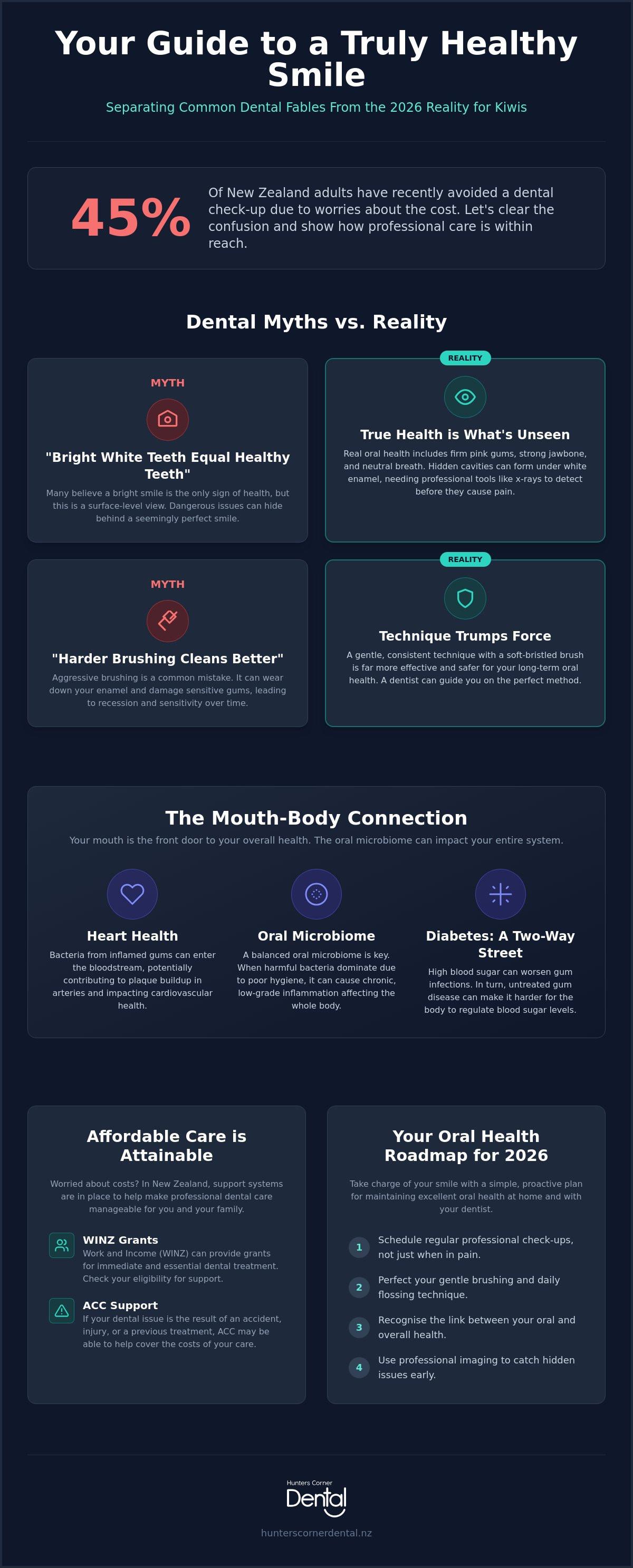
Did you know that nearly 45% of New Zealand adults recently avoided a check-up because they were worried about the cost? It's a staggering figure that shows just how many of us feel anxious about the price of a healthy smile. Finding a reliable dentist shouldn't be a source of stress for any Kiwi family. It's completely normal to feel overwhelmed by conflicting health advice or nervous about potential discomfort, especially when you're trying to balance your budget with your wellbeing.
We understand those concerns, and we're here to help you navigate them with confidence. This guide will help you separate common dental fables from the 2026 reality, showing you that professional care is more accessible than you might think. You'll learn exactly what a healthy mouth looks like, how to access support through providers like WINZ or ACC, and simple ways to improve your oral health at home. Let's clear away the confusion and get you back on the path to a bright, pain-free smile.
Key Takeaways
- Learn why a bright smile doesn't always mean a healthy one and how to spot hidden issues before they cause pain.
- Discover the vital link between your oral microbiome and your overall health to protect your total wellbeing.
- Find out why harder brushing isn't better and how a trusted dentist can help you perfect your technique.
- Understand how to access affordable care through WINZ grants and ACC support to keep your dental treatments manageable.
- Get a practical roadmap for 2026 to maintain your smile at home and feel confident about your next professional visit.
Debunking the 'White Teeth Equals Healthy Teeth' Myth
Many Kiwis believe that if their teeth look bright in the mirror, everything is fine. This is a common misconception. True oral health is a complete picture. It involves your gums, the supporting bone structure, and even the freshness of your breath. A smile can look brilliant while underlying issues quietly develop. When you visit a Hunters Corner Dental in Papatoetoe, the focus is on your total wellbeing, not just the surface shade of your enamel.
Oral health is actually defined by several factors:
- Firm, pink gums that don't bleed during cleaning.
- Strong bone density supporting the tooth roots.
- Neutral breath that doesn't signal bacterial overgrowth.
- Functional alignment for comfortable chewing.
Why Pearly Whites Can Hide Deep Cavities
Enamel is the hardest substance in your body, but it isn't invincible. Decay often starts in the tiny, microscopic grooves of your molars where toothbrush bristles simply cannot reach. A cavity can hollow out the internal dentin of a tooth while the outer shell remains white and seemingly perfect. While surface staining is often just a cosmetic result of your morning flat white, tiny chalky white spots near the gum line can signal early decay. Dental caries is a bacterial infection of the tooth structure. Without a professional exam, these "hidden" cavities can grow until they reach the sensitive nerve at the centre.
The Role of Oral Imaging in Modern Diagnosis
Relying on what you see in the bathroom mirror is risky. A lack of pain doesn't always mean your mouth is healthy. By the time a problem causes physical pain, it's often progressed into a more complex situation. This is why professional imaging is a cornerstone of good oral hygiene practices and modern preventative care. Modern digital x-rays in 2026 are incredibly safe, fast, and provide high-resolution views of your mouth's anatomy.
These images allow your dental team to see between teeth and under old fillings where decay likes to hide. We use these tools to catch issues while they're small and simple to manage. Seeing imaging as a preventative tool rather than a diagnostic one saves you from future discomfort. If you're concerned about the investment required for these check-ups, you can view our transparent pricing and subsidy information. Taking a proactive approach ensures your smile stays healthy from the inside out. Don't wait for a toothache to tell you something is wrong. A quick visit to your local dentist can provide the peace of mind you deserve.
The Mouth-Body Connection: Why Oral Health Is Not Just About Teeth
Your mouth isn't a separate room in the house of your body. It's the front door. For a long time, many people viewed a cavity as just a hole in a tooth that needed a patch. However, the reality we see in 2026 is that your oral health is a vital foundation for your entire body's vitality. This is why a trusted dentist will always consider your broader health history during a check-up.
You actually host a complex ecosystem of bacteria in your mouth known as the oral microbiome. Most of these microbes are helpful and keep your system in balance. Problems arise when harmful bacteria take over due to poor hygiene or diet. These bacteria don't just stay on your teeth; they can enter your bloodstream through tiny breaks in inflamed gum tissue. This chronic inflammation acts like a low-grade fire that can trigger or worsen health issues in other parts of your body.
The New Zealand Ministry of Health continues to prioritise oral wellness because of these systemic links. The good news is that taking charge of your gum health can provide heaps of benefits for your general energy and long-term wellbeing. Protecting your smile is a simple, effective way to protect your whole self, and for those who extend this care to their animals, check out Healthy Horses Inside Out.
How Gum Health Affects Your Heart
There is a significant link between periodontal disease and cardiovascular inflammation. Bacteria from your mouth can travel through the blood and contribute to the buildup of plaque in your arteries. Researchers are prioritising this oral-systemic link in 2026 as a key factor in heart health. It's a powerful takeaway to remember: keeping your gums healthy is a proactive way to support a healthy heart.
Diabetes and Dental Care: A Two-Way Street
If you're living with diabetes, your dental health requires extra attention. High blood sugar can weaken your white blood cells, making you more prone to gum infections. Conversely, untreated gum disease can actually make it harder for your body to regulate blood sugar levels. It's a circular relationship that requires a team approach. Always share your health status with your dental professional so they can provide the most supportive care possible.
Investing in your oral health is one of the best things you can do for your future self. If you're unsure where to start or have concerns about the cost of treatment, you can view our transparent pricing and subsidy information to find a path that works for you.
Common Brushing and Flossing Fables Debunked
Many of us have developed habits based on advice that sounds logical but actually causes harm. We often think that more effort equals better results. When it comes to your daily routine, some of the most common beliefs are actually fables that can lead to long-term damage. Working with a reliable dentist that families trust helps you unlearn these habits. Replacing them with techniques that actually protect your smile is a great first step toward better health.
Why Scrubbing Too Hard Backfires
You might feel like you're getting a deeper clean by scrubbing vigorously. In reality, teeth aren't like a dirty kitchen floor. Brushing too hard leads to toothbrush abrasion, which permanently thins your protective enamel. It also causes your gums to recede, exposing the sensitive roots of your teeth. This can lead to sharp pain when you enjoy a cold drink or a hot meal. We recommend using a soft-bristled brush or an electric model with a built-in pressure sensor. Use a gentle, circular motion to massage away plaque without hurting the surrounding tissue. This simple shift preserves your enamel and keeps your smile comfortable for years to come.
The Truth About Bleeding Gums
It's a common worry. You see a bit of pink in the sink and assume you've injured yourself, so you stop flossing that area. However, bleeding is usually a sign of gingivitis, which is inflammation caused by plaque buildup. It isn't an injury; it's a signal that those tissues need more attention, not less. Consistent, daily flossing actually strengthens your gums and stops the bleeding over time. If the bleeding persists despite a week of regular flossing, it's time for a professional check-up to rule out more serious periodontitis. Addressing this early prevents bone loss and keeps your natural teeth secure.
Another frequent myth is that mouthwash can replace flossing. While mouthwash is a great addition to your routine, it can't physically scrub away the sticky film between your teeth. Even with perfect home care, some plaque will inevitably mineralise and harden into tartar. This cannot be removed with a toothbrush or floss at home. A professional scale and polish is essential to clear this buildup and prevent gum disease. Keeping up with these visits at your local dentist ensures your home efforts don't go to waste. If you're planning your next visit, check out our pricing and subsidy information to see how affordable preventative care can be.
Is Professional Dental Care Actually Unattainable for Kiwis?
It's a common worry that professional dental care is a luxury out of reach for the average family. Many people put off their visits because they're afraid of a massive bill at the end. We understand this stress. However, the idea that you must always pay for everything upfront and out of pocket is one of the biggest myths in New Zealand dentistry. Finding a supportive dentist that families can rely on means finding a partner who helps you manage these costs effectively. If you're looking for a dentist in South Auckland that locals trust for honest advice, we're here to help.
We believe that clear communication is the best way to build trust. This is why we prioritise pricing transparency for all our patients. When you know what to expect, you can plan your care without the fear of hidden surprises. There are several pathways available in 2026 to help make treatment more manageable for everyone in our community.
Navigating ACC and WINZ Support
Many Kiwis don't realise that help is often available through government systems. If you've suffered a dental injury due to an accident, ACC may cover a significant portion of your treatment. This isn't just for rugby players or high-impact athletes. A simple trip in the backyard or a fall at home can qualify you for support. We're an ACC provider and can help you navigate the claim process from start to finish.
For those on low incomes or receiving benefits, Work and Income (WINZ) provides emergency dental grants. As a WINZ registered practice, we can provide you with the formal quotes required to apply for this assistance. These grants are designed to get you out of pain and treat urgent issues before they get worse. There's always a way to access care; you just need a friendly guide to show you the options.
Why Prevention is Your Best Financial Strategy
The most expensive way to use a dentist is to wait for an emergency. A maintenance mindset is your best financial tool. Think of your mouth like a car. A routine service is much cheaper than replacing the entire engine after a breakdown. Catching a small "hole" early and treating it with a simple filling is far more affordable than waiting until you need a complex root canal or oral surgery. This proactive approach to health budgeting isn't limited to dental care; for instance, you can explore Per-procedure medical fees for hair restoration and transplantation to see how other restorative treatments might fit into your long-term wellness plan.
Regular check-ups and cleanings help us spot issues before they become painful and pricey. By investing in your oral health today, you're actually saving your future self from significant financial strain. If you're ready to take that first step toward a healthier smile, book an appointment with our team today and let's create a plan that fits your budget.
Taking Charge of Your Smile: Your Oral Health Roadmap for 2026
Taking charge of your oral health shouldn't feel like a daunting task. Whether you've been away from the clinic for a few months or several years, it's never too late to start a new journey toward a healthier smile. By choosing a supportive dentist Papatoetoe families trust, you can move away from stressful emergency care and toward a life of lasting vitality. This roadmap is designed to help you build simple, sustainable habits that protect your teeth and your overall wellbeing.
We see ourselves as your partner in this process. Our goal is to provide a safe, welcoming space where you feel heard and respected. A healthy mouth in 2026 is about more than just avoiding cavities; it's about feeling confident and comfortable in your daily life. If you're ready to take the first step, we invite you to book a stress-free dental check-up to get started on your path to wellness.
Creating a Realistic Home Care Routine
Consistency is much more important than intensity. You don't need a complicated routine to see real results. We recommend following the simple '2x2' rule: brush your teeth for two minutes, twice every day. This ensures you're giving the fluoride in your toothpaste enough time to strengthen your enamel. Every evening, take a moment to use floss or interdental brushes. These tools reach the tight spaces between your teeth that a brush simply can't touch.
Your diet also plays a massive role in your oral health. Try to reduce hidden sugars found in processed snacks and fizzy drinks. These sugars feed the bacteria that cause decay. Choosing water as your primary drink is one of the kindest things you can do for your smile. Small, daily choices lead to big, long-term wins for your health.
Choosing a Supportive Dental Partner
The right dental centre should feel like a reliable neighbour. Look for a clinic that offers a warm, community-oriented atmosphere rather than a cold, clinical one. You deserve a team that explains your treatment options clearly, without using confusing medical jargon. This transparency helps you feel in control of your health journey.
A great practice is also one that welcomes the whole family. From a toddler's very first visit to a grandparent's restorative care, the environment should be comfortable for all ages. If you're curious about how we make care accessible, you can always check our pricing and subsidy information. We're here to support you every step of the way.
Embrace a Healthier Smile for Life
Understanding the truth behind common dental myths is the first step toward lasting wellbeing. You now know that a bright smile is only one part of the picture, and that your oral health is deeply connected to your heart and overall vitality. By moving past the fear of bleeding gums and embracing a gentle, consistent home routine, you're already doing your future self a massive favour. Professional care is a supportive partnership; it isn't a financial burden you have to carry alone.
As a trusted Dentist in Papatoetoe that families have relied on for over 60 years, we're here to provide gentle, family-focused care that puts your peace of mind first. We're proud to be an ACC accredited provider and WINZ registered for dental support, ensuring that quality treatment remains accessible for everyone in our community. Let's work together to keep your smile healthy and your confidence high. Book your reassuring dental check-up today and take the next step on your health journey. You deserve a smile that feels as good as it looks.
Frequently Asked Questions
Is it normal for my gums to bleed when I brush or floss?
Bleeding gums are common but they aren't normal. This usually indicates gingivitis, where plaque buildup causes your gums to become inflamed. While it might be tempting to stop, consistent gentle flossing often resolves the issue over time. If the bleeding persists after a week of proper care, you should visit a dental centre to check for deeper periodontal disease. Early intervention prevents these issues from becoming more complex and painful.
How often should I actually see a dentist for a check-up?
Most healthy adults should book a check-up every 6 to 12 months. This allows your dentist to catch small issues before they become painful, expensive emergencies. Your professional will advise the best frequency based on your specific oral health history and risk factors. Regular visits ensure your home care routine is working effectively and keeping your smile on track for the long term.
Can poor oral health really affect my pregnancy?
Poor oral health can absolutely affect your pregnancy. Hormonal changes can make your gums more sensitive to plaque during this time. Maintaining a clean mouth and seeing a dentist during pregnancy is a safe and vital part of your prenatal care for both you and your baby.
Do I need to see a dentist if I don't have any tooth pain?
You definitely need to see a dentist even if you don't have any tooth pain. Many dental issues, including early-stage decay and gum disease, are completely painless in the beginning. By the time you feel physical pain, the problem is often advanced and requires more complex treatment. Regular exams with a dentist Papatoetoe residents trust ensure you stay ahead of hidden issues that you can't see in the mirror.
What should I do if I have a dental emergency but cannot afford it?
You shouldn't wait to seek help if you have a dental emergency but are worried about the cost. In New Zealand, there are support systems like WINZ emergency dental grants for eligible low-income earners. Many clinics also offer ACC treatment if the issue was caused by an accident. Contact a WINZ registered dentist to discuss your options and get a formal quote to help you access the care you need.
Are electric toothbrushes really better than manual ones?
Electric toothbrushes are often more efficient at removing plaque than manual ones. While you can do a great job with a manual brush, many modern electric models in 2026 include pressure sensors. These alert you if you're scrubbing too hard, which helps prevent gum recession and enamel wear. This technology makes it much easier to maintain a gentle but effective cleaning routine at home every day.
How can I get a WINZ dental quote for my treatment?
Getting a WINZ dental quote is a straightforward process designed to help you get urgent care. Simply book an appointment with a WINZ registered dentist let them know you need a quote for a grant. They'll perform an exam and provide the necessary paperwork for you to take to Work and Income for approval. This ensures you can address pain or infection without unnecessary delay.
Does ACC cover a broken tooth from a fall?
ACC generally covers dental injuries resulting from accidents, including falls, trips, or sports injuries. You'll need to see an ACC registered dentist who can help you lodge a claim for the damage. They'll assess the injury and determine what portion of the treatment is covered under the scheme. This support is vital for ensuring that unexpected accidents don't result in long-term dental problems or financial strain.


