

You’re laughing with friends when you catch a glimpse of a dark, metallic smudge in the mirror. It isn’t a new cavity; it’s an old silver filling that makes you feel self-conscious every time you open your mouth. Many of our patients feel the same way, wanting a smile that looks healthy and entirely natural. Modern white fillings have changed the game in 2026, moving beyond simple aesthetics to become a high-strength structural reinforcement for your teeth.
We understand that dental visits can feel a bit daunting, especially if you're worried about drills or mercury. That’s why we’ve put together this guide to show you how gentle, tooth-coloured restorations can restore your confidence and your oral health. You’ll discover how the latest nano-hybrid composites bond directly to your tooth, providing a durable result that handles hot and cold drinks without the sensitivity of old-fashioned metal. We will walk you through the benefits of these mercury-free materials, the latest global shifts away from amalgam, and exactly what to expect during a comfortable, modern repair.
Key Takeaways
- Learn how modern white fillings blend seamlessly with your natural tooth colour, making your dental repairs completely invisible when you smile.
- Discover how advanced bonding techniques strengthen your teeth while allowing for a more conservative and gentle approach to cavity repair.
- Understand why today’s composite materials are a durable, metal-free alternative to traditional silver amalgam.
- Get a clear look at our patient-focused procedure, designed to provide a painless and reassuring experience for those feeling a bit nervous.
- Explore how we make restorative treatments more accessible through our status as a registered provider for community support schemes.
What are White Fillings and Why Are They the Modern Choice?
Gone are the days when a trip to the dentist meant leaving with a mouth full of dark, noticeable metal. Today, white fillings have become the gold standard for restoring teeth without compromising the natural beauty of your smile. These restorations are crafted from a specialised mixture of plastic and glass particles, designed to mimic the exact shade and translucency of your natural enamel. When we place them, they blend so perfectly that it's often impossible to tell where your tooth ends and the repair begins.
Scientists and dental professionals refer to these versatile materials as Dental composite resins. They provide far more than just a way to fix a cavity. We frequently use them to repair chipped edges, reshape teeth that have worn down over time, or close small gaps that might make you feel self-conscious. This versatility makes them a vital tool in modern, conservative dentistry, where our goal is always to keep as much of your healthy tooth as possible.
One of the most significant benefits for our patients is the biocompatibility of these modern resins. Unlike older materials, these are designed to be gentle on your body and your oral environment. They bond directly to the tooth structure, which helps to seal the area and prevent further decay while maintaining the tooth's natural flexibility. This bonding process acts like a reinforcement, supporting the remaining walls of the tooth and reducing the risk of future fractures.
The End of the "Metal Mouth" Era
Many people still carry the visible reminders of dental work from years ago. Those dark, metallic spots can make you feel hesitant to laugh or smile broadly in photos. Choosing white fillings isn't just about looks; it's about the confidence that comes from knowing your dental work is invisible. These materials reflect light just like your real teeth do, ensuring your repair remains your little secret. It's a simple way to refresh your look while keeping your oral health a top priority.
Materials Used in Modern Composite Fillings
The science behind your smile has progressed significantly. Modern fillings use a sophisticated blend of resin and microscopic glass fillers to create a surface that is both smooth and incredibly tough. These materials are completely mercury-free, which offers peace of mind for many of our families. Composite resin is a nano-hybrid material designed for both beauty and bite-force resistance. This ensures your repair stays polished and strong for years to come, even on the back teeth where chewing pressure is highest.
How White Fillings Strengthen Your Tooth Structure
While many people choose white fillings for their looks, the real magic happens at a microscopic level. Traditional silver fillings are held in place by mechanical retention. This means a dentist has to create a specific shape in your tooth, often removing healthy enamel just to ensure the metal won't fall out. In contrast, modern composite resin uses chemical adhesion. It bonds directly to the tooth surface, allowing us to practice conservative dentistry by only removing the damaged or decayed parts.
This bonding process turns the filling into an integral part of your tooth. Instead of just sitting in a hole, the resin actually pulls the remaining walls of the tooth together. This internal support is crucial for preventing the fractures that often occur with older, large metal fillings. You can see how this compares to other treatments in this FDA comparison of filling materials, which highlights how different choices impact your long-term oral health.
Chemical Adhesion vs. Mechanical Retention
Think of a silver filling like a wedge in a log. Over time, the pressure of biting can cause that wedge to split the tooth. White fillings act more like a strong adhesive. They support the tooth structure from the inside out, which significantly reduces the risk of the tooth cracking under pressure. By preserving more of your natural enamel, we help you keep your original teeth for much longer.
Another structural advantage involves how the material reacts to temperature. Metal fillings expand when you drink hot coffee and contract when you eat ice cream. This constant movement can eventually stress the tooth or create tiny gaps where bacteria hide. Composite resin is much more thermally stable. It behaves more like your natural tooth, staying put and maintaining a tight seal regardless of what you're eating or drinking.
Protecting Against Sensitivity
One of the most common complaints with metal is post-treatment sensitivity. Because composite resin is a poor conductor of heat and cold, it acts as a natural insulator for the sensitive nerves inside your tooth. We take great care in sealing the margins of every filling to prevent micro-leakage. This careful sealing ensures that bacteria can't get underneath the repair, which is a major win for your long-term comfort. If you're noticing sensitivity or have concerns about an old repair, it might be time for a quick check-up to discuss your options and see if a modern restoration is right for you.
White Fillings vs. Silver Amalgam: The Honest Comparison
Choosing between traditional silver amalgam and modern white fillings often feels like a choice between durability and aesthetics. For many years, silver was the undisputed king of strength, while early composites were reserved for front teeth where they didn't have to work as hard. Technology has moved on significantly by 2026. Today, the gap in performance has narrowed so much that the decision is often a no-brainer for those wanting a healthy, beautiful smile.
Silver fillings are made from a mix of metals, including mercury, silver, tin, and copper. While they are incredibly tough, they don't look like part of your body. They appear as dark spots that can eventually turn the surrounding tooth a greyish hue. On the other hand, composite resin mimics the natural look of your teeth perfectly. Beyond looks, the way these materials interact with your tooth structure is where the real difference lies.
Addressing the Durability Myth
A common concern we hear is that composite materials won't last as long as metal. In the past, this was true. However, 2026-standard nano-hybrid composites are engineered specifically to handle the heavy pressure of back-tooth chewing. You can typically expect white fillings to last between 10 and 15 years with proper care. Longevity depends heavily on your daily habits, such as your diet and how well you brush and floss. If you maintain a good routine and visit us for regular cleans, your restorations will remain strong and stable for a decade or more.
The "Wedge Effect" of Metal Fillings
Metal fillings have a physical property that can be quite damaging over time. Because they don't bond to the tooth, they simply sit in the cavity like a wedge. As you chew, and as the metal expands and contracts with temperature changes, it exerts outward pressure on the remaining tooth walls. This "wedge effect" is a leading cause of tooth fractures.
We often see patients with old, leaking amalgams that have caused deep cracks in the enamel. By choosing to replace these with bonded resin early, you can often avoid the need for a more extensive dental crown. This proactive approach doesn't just save your tooth structure; it saves you from more complex and expensive treatments later. It's a gentler choice that prioritises the long-term integrity of your natural smile.
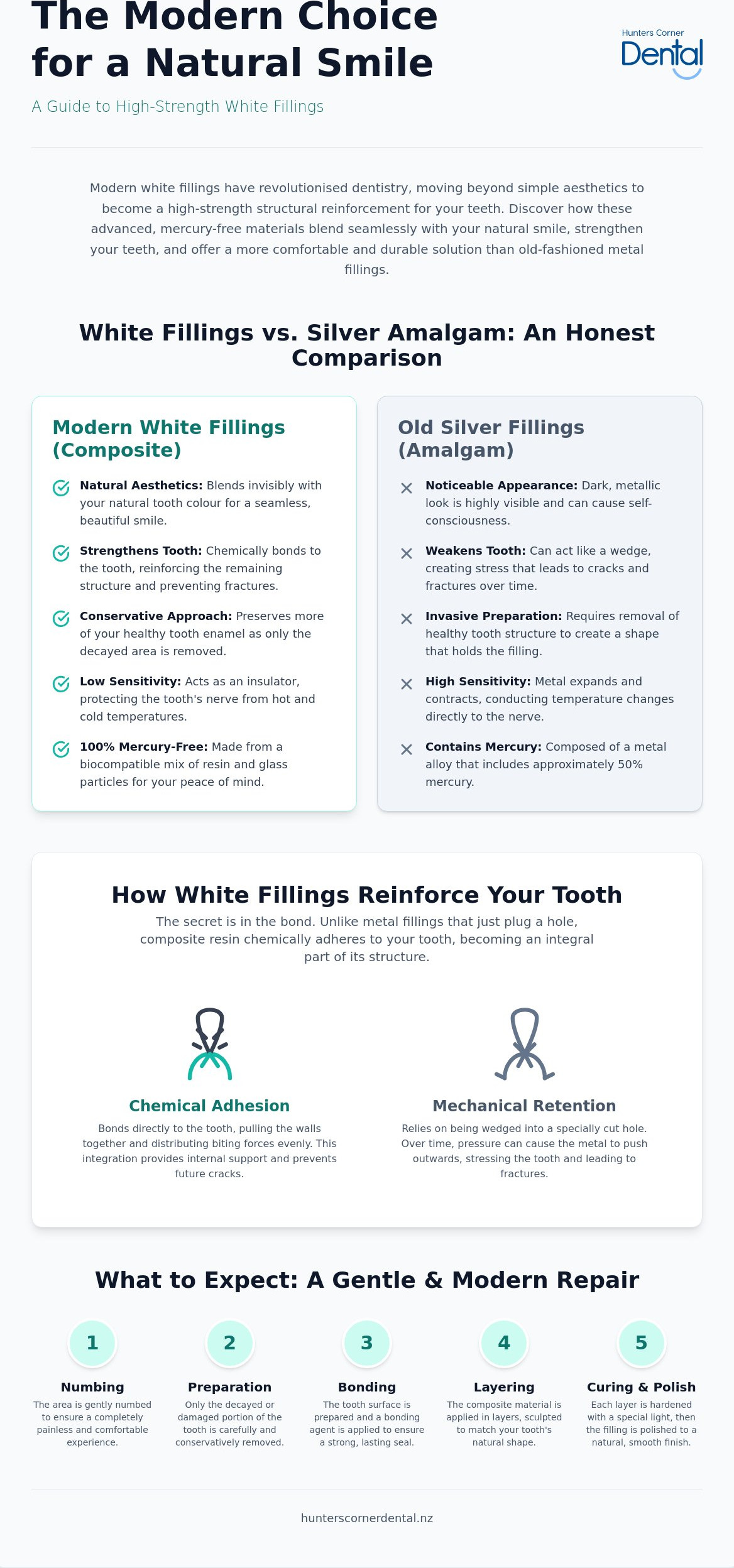
What to Expect: The Procedure for Getting a Filling
Getting a filling is one of the most common dental treatments, yet we know it can still cause a bit of a flutter in the stomach. We've refined our process to make sure you feel relaxed and informed from the moment you sit in the chair. Modern white fillings are applied with incredible precision, often taking less time than a standard lunch break. We focus on a gentle, step-by-step approach that prioritises your peace of mind and ensures a high-quality result.
The procedure generally follows five clear steps to restore your tooth:
- Step 1: Gentle Numbing. We apply a local anaesthetic to the area. Our team takes extra care to ensure you're completely comfortable and won't feel any discomfort during the treatment.
- Step 2: Cleaning the Cavity. Once you're fully numb, we carefully remove any decay or old filling material. We then clean the cavity thoroughly to create a sterile environment for the new resin.
- Step 3: Etching and Priming. We prepare the tooth surface with a mild etching gel. This slightly roughens the enamel on a microscopic level, which is essential for creating a rock-solid bond.
- Step 4: Layering and Curing. We apply the composite resin in thin layers, carefully matching the shade to your surrounding teeth. A specialised blue light is used to "cure" or harden each layer in seconds.
- Step 5: Shaping and Polishing. Finally, we shape the material to match the natural contours of your tooth. We check your bite and polish the surface until it feels smooth and natural against your tongue.
A Focus on Patient Comfort
We believe that a trip to the dentist should feel like visiting a reliable neighbour. Our clinic is designed to be a calm, reassuring space where dental anxiety is managed with empathy and modern technology. We use the latest local anaesthetics that work quickly and effectively. Many of our patients find the experience much faster than they expected, often leaving the chair feeling a sense of relief and personal restoration. If you've been putting off a repair due to nerves, we're here to help you through it at your own pace.
Immediate Aftercare and Results
One of the best things about white fillings is that they're fully hardened the moment you leave our clinic. You don't have to wait for hours for the material to set. However, we do recommend waiting until your anaesthetic has completely worn off before eating or drinking hot liquids. This prevents you from accidentally biting your cheek or burning your mouth while it's still numb.
You might notice some minor sensitivity to cold or pressure for a day or two as the tooth settles. This is a normal part of the healing process. If you've had a more extensive restoration and want to know more about the recovery stages, you can find helpful advice in our guide on root canal aftercare. If you're ready to experience gentle, modern dental care that restores your confidence, book your consultation with our friendly team today.
Investing in Your Smile: Costs and Accessibility
We know that managing dental costs is a priority for most families. When you choose white fillings, you're making a smart investment in both your appearance and your long-term health. The total cost of a restoration depends on a few specific factors. These include the size of the cavity, the location of the tooth, and how much of the original structure we need to rebuild. By addressing a small hole now, you're preventing the need for more complex and expensive treatments, like a crown or a dental implant, which could cost significantly more in the future.
Think of a filling as a structural repair. It's far more cost-effective to reinforce a tooth while it's still mostly healthy than to wait until a major fracture occurs. While some might worry about the initial cost, these restorations act as a protective barrier. They are a smart middle ground between basic preventative care and more invasive procedures. Our team focuses on providing high-quality, durable results that stand the test of time, ensuring you get the best value for your money.
Financial Support Options
We believe that everyone deserves a healthy smile, regardless of their financial situation. That’s why we work closely with government agencies to make essential care more accessible. If your dental damage was caused by an accidental injury, you might be eligible for coverage through ACC. We also provide quotes for WINZ dental grants, helping low-income earners manage the cost of urgent repairs. You can check our pricing page for a general guide on treatment costs to help you plan your visit.
Long-term Value of Quality Restorations
There’s an old saying that an ounce of prevention is worth a pound of cure. This is especially true in dentistry. Choosing a high-quality restoration the first time around means fewer replacements and less time in the dentist's chair over your lifetime. Modern composite materials are designed for longevity, but their success still relies on a strong foundation of oral hygiene and the precision of the placement. By using the latest nano-hybrid resins, we ensure your repair is both tough and aesthetically pleasing, saving you from the stress of recurrent decay.
Regular maintenance is the secret to keeping your dental bills low. By catching decay in its earliest stages, we can often use a small, conservative filling rather than a large restoration that covers multiple surfaces. It’s all about staying proactive. We encourage you to book your next dental check-up to stay on top of your oral health and catch any minor issues before they become major expenses. Our friendly team is here to guide you through every step of your health journey with honesty and transparency.
Take the Next Step Toward a Brighter Smile
Choosing to repair your teeth shouldn't feel like a compromise between strength and beauty. Modern white fillings offer the best of both worlds, providing a durable, mercury-free solution that bonds directly to your enamel. By opting for these advanced materials, you're not just hiding a cavity; you're reinforcing your tooth's natural structure and preventing future cracks. We've seen how this conservative approach helps our patients keep their natural teeth for longer while enjoying a smile that looks completely untouched.
At Hunters Corner Dental, we combine over 60 years of gentle dental experience with a commitment to making care accessible for our South Auckland Community. As an ACC and WINZ registered provider, we're here to help you navigate your options with transparency and kindness. We use only high-quality materials designed for longevity, ensuring your results feel as good as they look. Restore your smile with natural-looking white fillings, book your consultation today. We look forward to helping you feel confident and comfortable in your dental health journey.
Frequently Asked Questions
How long do white fillings typically last?
Most modern restorations last between 10 and 15 years when you maintain a solid oral hygiene routine. Their lifespan depends on the size of the cavity and where the tooth is located in your mouth. Regular check-ups allow us to monitor the bond and ensure the material remains strong and secure over the long term.
Do white fillings stain over time like natural teeth?
Composite resin can pick up surface stains from coffee, tea, or red wine, much like your natural enamel. However, the advanced nano-hybrid materials used in 2026 are highly resistant to deep discolouration. Keeping up with your professional cleans helps to polish the surface and maintain that bright, natural look for years.
Is it worth replacing my old silver fillings with white ones?
It is often a wise choice if your old metal fillings are showing signs of wear, such as leaking margins or grey staining on the surrounding tooth. Many patients choose to switch for the aesthetic boost and the added structural support that bonding provides. We can assess your old repairs and help you decide if a modern update is right for you.
Does getting a white filling hurt?
The procedure is designed to be a completely painless experience. We use effective local anaesthetics to ensure the area is fully numb before we begin any work. Most of our patients find the process straightforward and comfortable, often feeling only a bit of light pressure while we shape the new material.
Can white fillings be used on back teeth (molars)?
Yes, today's white fillings are specifically engineered to handle the heavy biting forces required by your back teeth. The materials are incredibly tough and wear-resistant, making them a reliable alternative to metal even in high-pressure areas. You can enjoy a repair that is both structurally sound and invisible when you laugh.
Are white fillings safe for children?
They are an excellent, mercury-free choice for children's dental repairs. Because the resin bonds directly to the tooth, we can keep the preparation very conservative, which is ideal for smaller teeth. The quick curing process also helps to make the appointment shorter and more manageable for our younger patients.
How much does a white filling cost in New Zealand?
The investment depends on the complexity of the repair and the amount of material required to restore the tooth. We believe in honest, transparent pricing and will provide a clear estimate after your initial assessment. We also work with ACC and WINZ to help ensure white fillings are accessible for those who need financial support.
What happens if a white filling falls out?
If a restoration comes loose, you should contact us as soon as possible to have it repaired. An exposed cavity is vulnerable to sensitivity and further decay, so it’s important to seal the area quickly. While you wait for your appointment, try to keep the area clean and avoid chewing on that side of your mouth.


